
Summary:
You might be wondering if HVAC maintenance is really necessary or just another thing contractors push to make money. The truth is, your heating and cooling system is complex machinery with moving parts, electrical components, and chemicals that need attention.
Without regular care, efficiency drops. Your system works harder to do the same job, which means higher energy bills every month. Small issues turn into big problems. A dirty coil or clogged filter forces other components to strain, leading to premature failure.
Most importantly, neglected systems break down at the worst possible times. Nobody wants their air conditioning to quit during a July heat wave or their furnace to fail on the coldest night of winter. Regular maintenance catches problems before they leave you uncomfortable and scrambling for emergency service.

Skipping maintenance doesn’t cause immediate disaster, which is exactly why so many homeowners put it off. But the consequences add up over time in ways that cost you more than the maintenance would have.
Your energy bills creep higher. When filters get clogged, coils get dirty, and components wear down, your system has to run longer to reach the temperature you want. You might not notice the difference month to month, but compare this year’s bills to last year’s and you’ll see the impact.
Your equipment wears out faster. HVAC systems typically last 15 to 20 years with proper care. Without it, you’re looking at half that lifespan or less. Replacing a system years early because you skipped routine maintenance is an expensive lesson.
You risk your warranty. Many manufacturers require proof of regular maintenance to honor warranty claims. If your compressor fails and you can’t show you’ve kept up with service, you might be paying for repairs that should have been covered.
Indoor air quality suffers. Your HVAC system doesn’t just control temperature—it filters the air your family breathes. Dirty filters and components mean dust, allergens, and pollutants circulate through your home instead of getting trapped.
Safety issues can develop. Furnaces with cracked heat exchangers or faulty gas connections create carbon monoxide risks. Electrical problems can cause fires. Regular inspections catch these hazards before they endanger your family.
The pattern is consistent: small neglect leads to bigger problems. A $150 maintenance visit prevents a $5,000 emergency repair or premature replacement. The math isn’t complicated, but it requires thinking beyond this month’s budget to what saves money over the years you’ll own your system.
Skipping maintenance doesn’t cause immediate disaster, which is exactly why so many homeowners put it off. But the consequences add up over time in ways that cost you more than the maintenance would have.
Your energy bills creep higher. When filters get clogged, coils get dirty, and components wear down, your system has to run longer to reach the temperature you want. You might not notice the difference month to month, but compare this year’s bills to last year’s and you’ll see the impact.
Your equipment wears out faster. HVAC systems typically last 15 to 20 years with proper care. Without it, you’re looking at half that lifespan or less. Replacing a system years early because you skipped routine maintenance is an expensive lesson.
You risk your warranty. Many manufacturers require proof of regular maintenance to honor warranty claims. If your compressor fails and you can’t show you’ve kept up with service, you might be paying for repairs that should have been covered.
Indoor air quality suffers. Your HVAC system doesn’t just control temperature—it filters the air your family breathes. Dirty filters and components mean dust, allergens, and pollutants circulate through your home instead of getting trapped.
Safety issues can develop. Furnaces with cracked heat exchangers or faulty gas connections create carbon monoxide risks. Electrical problems can cause fires. Regular inspections catch these hazards before they endanger your family.
The pattern is consistent: small neglect leads to bigger problems. A $150 maintenance visit prevents a $5,000 emergency repair or premature replacement. The math isn’t complicated, but it requires thinking beyond this month’s budget to what saves money over the years you’ll own your system.
You don’t need to be an HVAC technician to handle basic maintenance. A few simple tasks done regularly keep your system running better between professional service visits.
Start with your air filter. This is the single most important thing you can do yourself. Locate your filter (usually in the return air duct or the furnace itself), pull it out, and hold it up to a light. If you can’t see through it easily, it’s time for a replacement. Most filters are cheap and take two minutes to swap out.
Check your outdoor unit monthly. Walk outside and look at your condenser. Is there debris piled around it? Are leaves or grass clippings blocking the fins? Clear everything away and give yourself at least two feet of clearance on all sides. While you’re there, look for any obvious damage or unusual wear.
Keep your vents clear inside your home. Furniture, curtains, or storage boxes blocking vents force your system to work harder. Walk through your rooms and make sure air can flow freely from every register.
These tasks don’t require tools, special knowledge, or much time. But they prevent the majority of common HVAC problems and keep your system efficient between professional checkups.
Some maintenance tasks require professional expertise, specialized tools, and technical knowledge you don’t want to mess with as a homeowner. Knowing when to call an HVAC contractor prevents you from causing damage while trying to save money.
Refrigerant levels need professional attention. Your system’s refrigerant charge affects cooling performance, but checking and adjusting it requires EPA certification. Too much or too little refrigerant makes your system less efficient and can damage components. If your AC isn’t cooling properly, call a contractor instead of attempting this yourself.
Electrical components are best left to professionals. Loose connections, worn wiring, and faulty capacitors create safety hazards. HVAC technicians know how to safely inspect and repair electrical issues without risking shock or fire.
Ductwork inspection requires specialized equipment. Professionals use cameras and pressure testing to find leaks, blockages, and insulation problems you can’t see. In New York City, NY, where many buildings have older, complex duct systems, professional inspection catches problems that waste energy and reduce comfort.
Cleaning evaporator and condenser coils thoroughly takes the right tools and technique. While you can do surface cleaning yourself, a deep clean requires removing panels, using specific cleaners, and knowing how to avoid damaging delicate fins. This is worth paying a professional to do right.
Gas furnace maintenance involves safety checks you shouldn’t skip. Inspecting heat exchangers for cracks, checking gas connections for leaks, testing combustion efficiency, and ensuring proper venting all require expertise. Carbon monoxide leaks are deadly, and professional inspection is the only way to know your furnace is operating safely.
Your system’s controls and thermostat might need calibration. If temperatures aren’t matching what you set or your system is short-cycling, a technician can diagnose sensor problems, calibrate controls, and ensure everything communicates properly.
The general rule: if it involves refrigerant, gas, electricity beyond simple connections, or components you’d need to disassemble the unit to reach, call a professional. The cost of a service call is always less than the cost of repairing damage from a DIY attempt gone wrong.
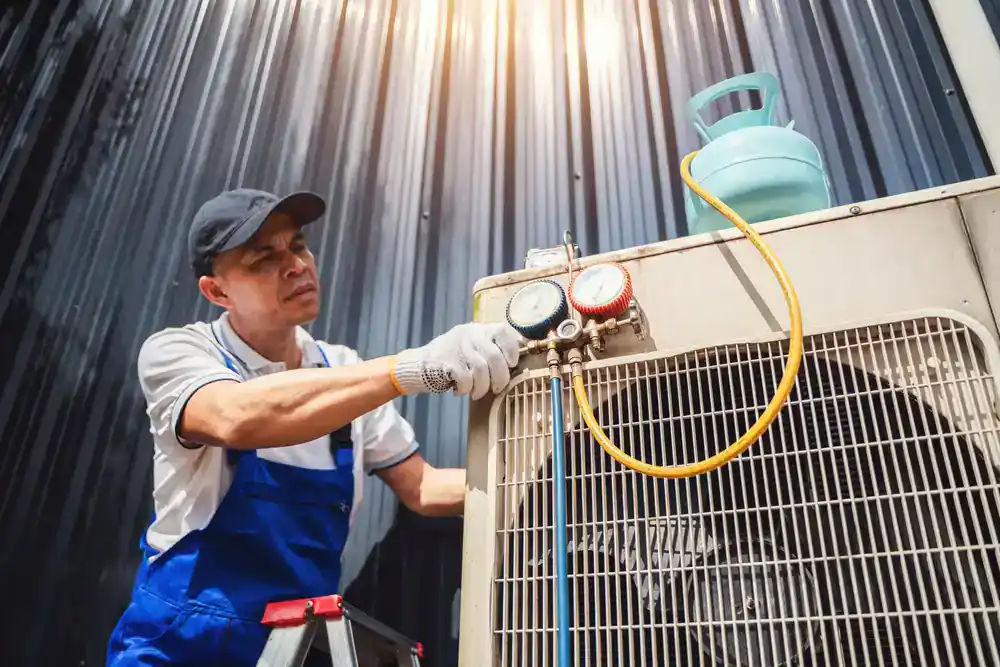
The difference between homeowners who get 20 years from their HVAC system and those who replace it after 10 often comes down to having a schedule and sticking to it. Here’s how to structure your maintenance throughout the year.
Spring is when you prepare your cooling system. Schedule a professional AC tune-up in March or April, before temperatures climb and HVAC contractors get busy with emergency calls. During this visit, your technician will clean coils, check refrigerant, test electrical connections, and make sure your system is ready for summer.
While you’re waiting for that appointment, change your filter and clean around your outdoor condenser unit. These simple tasks take 15 minutes but make your technician’s job easier and your system more efficient.
Summer requires monthly filter checks. When your AC runs constantly, filters get dirty faster. Set a reminder on your phone for the first of every month to check your filter. If it looks dirty, replace it. If it still looks clean, you can wait another month, but keep checking.
Fall means getting your heating system ready. Schedule a furnace inspection in September or October. Your technician will check your heat exchanger, test your ignition system, inspect gas connections, and ensure safe operation before you need heat regularly.
This is also when you should test your carbon monoxide detectors and replace batteries if needed. If you don’t have CO detectors and you heat with gas or oil, install them now. They’re inexpensive and potentially lifesaving.
Winter requires the same monthly filter checks as summer. Your furnace runs often, and dirty filters reduce efficiency and can cause overheating. Keep extra filters on hand so you’re never caught without one when you need to change it.
Throughout every season, stay alert for warning signs. Unusual noises, strange smells, uneven temperatures, or higher energy bills all signal problems that need attention. Don’t wait for your scheduled maintenance if something seems wrong—call for service before a small issue becomes an expensive failure.
The pattern is simple: professional service twice yearly, filter changes monthly or as needed, and attention to your system’s performance year-round. Write these tasks on your calendar, set phone reminders, or sign up for a maintenance plan that schedules everything for you. The method doesn’t matter as much as the consistency.
Your HVAC system represents a significant investment in your home’s comfort and value. Regular maintenance protects that investment by extending equipment life, maintaining efficiency, and preventing expensive emergency repairs.
The tasks aren’t complicated. Change filters regularly, keep your outdoor unit clear, schedule professional service twice a year, and pay attention when something doesn’t seem right. This routine saves you money on energy bills, helps you avoid uncomfortable breakdowns, and gives you years more reliable performance from your equipment.
If you’re in New York City, NY and need an HVAC contractor who understands the unique challenges of heating and cooling in this market, we’ve been serving the area for over 50 years. Our team knows both newer systems and the older equipment found in pre-war buildings, and we maintain an extensive inventory of parts to keep your system running.