
Summary:
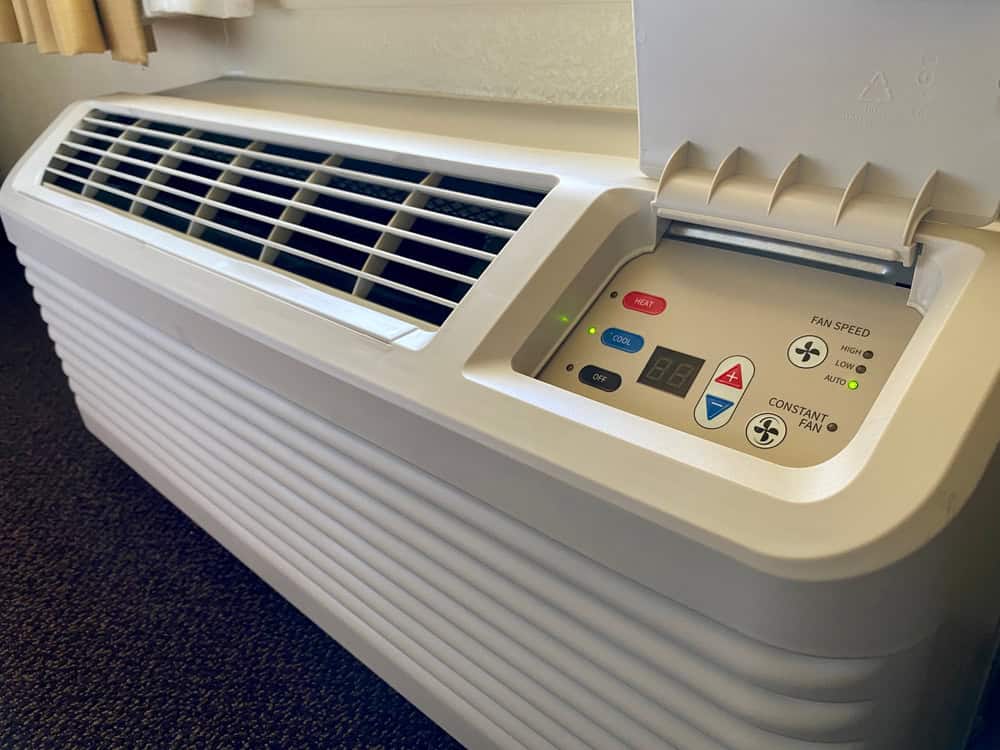
A packaged terminal air conditioner is a self-contained heating and cooling system installed through an exterior wall. You’ll find them in hotels, apartments, hospitals, assisted living facilities, and office buildings throughout New York City. Unlike central HVAC systems that use ductwork to distribute air throughout an entire building, each PTAC unit controls the climate for a single room or zone.
The “packaged” part means everything you need sits in one chassis. The compressor, evaporator coils, condenser coils, fan, and heating elements all work together in that box mounted through your wall. For cooling, the compressor pumps refrigerant through coils to pull heat and humidity from inside your space and exhaust it outside. For heating, the process reverses, or electric resistance coils kick in depending on your unit type.
This design is why PTACs became standard in NYC new construction. Many buildings simply don’t have the ceiling height or space for extensive ductwork that central air requires. A PTAC needs a wall sleeve, an exterior grille, and electrical connection. That’s it.
Hotels rely on PTAC units because guests need individual control without affecting other rooms. One guest wants it cold, another keeps their room warmer. With central air, you’re stuck with one temperature setting for entire floors. PTACs solve that problem while keeping installation and replacement costs manageable when you’re outfitting dozens or hundreds of rooms.
Apartment buildings use them for the same reason. Tenants control their own comfort and pay their own electric bills for heating and cooling. Property managers avoid the complexity and expense of maintaining a central system, and when one unit fails, it doesn’t take down climate control for the entire building. You replace that one unit and move on.
Assisted living facilities and hospitals need the individual control that PTACs provide. Elderly residents and patients have different temperature needs, and medical settings require reliable climate control in each room. The ability to service or replace a single unit without disrupting an entire wing makes PTACs practical for healthcare settings.
Office buildings with individual offices or small suites benefit from PTAC systems too. Different tenants or departments can control their own spaces. Corner offices that get more sun need more cooling capacity than interior spaces. Ductless installation means you’re not tearing apart ceilings or walls every time you reconfigure office layouts. A 700 square foot or smaller office works well with a properly sized PTAC unit.
The common thread is individual control without ductwork. If your building has multiple rooms or units that need independent temperature settings, and you don’t have space or budget for central air, PTACs are worth considering. They’re especially practical in NYC where building constraints, co-op requirements, and renovation limitations make traditional HVAC installation complicated or impossible.
Hotels rely on PTAC units because guests need individual control without affecting other rooms. One guest wants it cold, another keeps their room warmer. With central air, you’re stuck with one temperature setting for entire floors. PTACs solve that problem while keeping installation and replacement costs manageable when you’re outfitting dozens or hundreds of rooms.
Apartment buildings use them for the same reason. Tenants control their own comfort and pay their own electric bills for heating and cooling. Property managers avoid the complexity and expense of maintaining a central system, and when one unit fails, it doesn’t take down climate control for the entire building. You replace that one unit and move on.
Assisted living facilities and hospitals need the individual control that PTACs provide. Elderly residents and patients have different temperature needs, and medical settings require reliable climate control in each room. The ability to service or replace a single unit without disrupting an entire wing makes PTACs practical for healthcare settings.
Office buildings with individual offices or small suites benefit from PTAC systems too. Different tenants or departments can control their own spaces. Corner offices that get more sun need more cooling capacity than interior spaces. Ductless installation means you’re not tearing apart ceilings or walls every time you reconfigure office layouts. A 700 square foot or smaller office works well with a properly sized PTAC unit.
The common thread is individual control without ductwork. If your building has multiple rooms or units that need independent temperature settings, and you don’t have space or budget for central air, PTACs are worth considering. They’re especially practical in NYC where building constraints, co-op requirements, and renovation limitations make traditional HVAC installation complicated or impossible.
Installing a new PTAC unit in New York City involves more than just the equipment cost. You’re looking at the unit itself, the wall sleeve if you’re doing a first-time installation, the exterior grille, labor for installation, and potentially electrical work if your existing wiring doesn’t match the new unit’s requirements. For straightforward replacements where you’re swapping an old unit for a new one in an existing sleeve, costs run $2,500 to $3,500 on average.
First-time installations cost more because you need wall penetration, sleeve fabrication and installation, proper sealing to prevent air and water leaks, and exterior grille mounting. Expect to add $500 to $1,500 for these additional requirements. Co-op buildings may require board approval and specific contractors, which can affect timing and costs. Landmark buildings have additional requirements to maintain historical integrity.
The unit itself typically ranges from $800 to $1,800 depending on BTU capacity, brand, and features. Basic cooling with electric heat costs less than heat pump models. Higher efficiency ratings and smart controls add to the price. Commercial-grade units built for hotel use cost more than residential models but offer better durability and longer warranties.
Getting the BTU capacity right matters more than most property managers realize. Too small and the unit runs constantly without keeping the space comfortable. Too large and it short-cycles, turning on and off frequently without properly removing humidity. Both scenarios waste energy and shorten equipment life.
Start with square footage as your baseline. A 7,000 BTU unit handles roughly 250-300 square feet. A 9,000 to 12,000 BTU unit works for average hotel rooms and apartments in the 300-500 square foot range. Larger spaces up to 700 square feet need 15,000 BTU capacity. These are starting points, not final answers.
Now factor in real-world conditions. Corner rooms get sun exposure from two sides and need 10-20% more capacity. Top-floor units under the roof absorb more heat. West-facing rooms that get afternoon sun need extra cooling capacity. High ceilings mean more air volume to condition. Rooms with large windows or poor insulation require more BTUs. Heavy occupancy or heat-generating equipment like computers and projectors add to the load.
Wall thickness matters too for installation. Most PTAC units fit standard wall depths, but you need to measure your existing sleeve or wall opening before ordering. The standard PTAC size is 42 inches wide by 16 inches high, but depth varies. Measure carefully to ensure compatibility with your wall structure and existing sleeve if you’re replacing a unit.
Voltage and amperage need to match your electrical infrastructure. Residential PTAC units typically require 208/240 volts. Some commercial buildings use 265/277 volts. Amperage options include 15, 20, and 30 amps. If you’re replacing an existing unit, match the voltage and amperage to avoid costly electrical work. If you’re installing new, have an electrician verify your electrical capacity can handle the load.
Getting sizing wrong costs you money and comfort. Undersized units run constantly, driving up electric bills while failing to maintain temperature. Oversized units cycle too frequently, never running long enough to remove humidity properly. That creates a clammy feeling even when temperature is technically correct. Work with suppliers who can help you calculate the right capacity based on your specific room conditions, not just square footage.

PTAC units last 7 to 10 years on average with proper maintenance. Well-maintained units can reach 12 to 15 years. Neglected units might need replacement in 5 to 7 years. The difference between a unit that serves you for a decade versus one that dies prematurely usually comes down to maintenance.
Filter maintenance is the foundation. Clean or replace filters monthly in commercial settings like hotels where units run constantly. Residential applications can extend to every three to six months depending on usage and dust levels. A clogged filter forces the unit to work harder, reduces efficiency by 15-25%, and puts unnecessary strain on the compressor and motor. This single maintenance task prevents more problems than any other.
Annual professional service catches issues before they become expensive failures. Technicians check refrigerant levels, clean coils thoroughly, inspect electrical connections, test the thermostat and controls, examine the blower wheel and motor, and verify proper drainage. This service typically costs $150 to $300 per unit but extends equipment life and maintains efficiency. Skipping annual service to save money usually costs more in premature replacements and emergency repairs.
Seasonal preparation matters in NYC’s climate extremes. Before summer, clean the outdoor coils and grille, verify the unit cools properly, and check for unusual noises or vibrations. Before winter, test heating function, ensure the sleeve is properly sealed against drafts, and verify drainage isn’t blocked. These simple checks prevent breakdowns during peak demand when you need the system most.
Watch for warning signs that maintenance isn’t enough anymore. Rising energy bills without increased usage indicate declining efficiency. Frequent repairs add up quickly. If you’re spending more than $300 annually on repairs, or if a single repair costs more than 50% of a new unit, replacement makes more financial sense than continued maintenance. Inconsistent temperatures, unusual noises, or water leaks are red flags that the unit may be failing.
High-use environments like hotels need more aggressive maintenance schedules. Some properties clean filters weekly by rotating spare filters through rooms, ensuring every unit gets monthly filter cleaning without disrupting guests. Time-released algaecide pads in the base pan prevent algae buildup on coils that can cause compressor overheating. These extra steps make sense when you’re managing dozens or hundreds of units and can’t afford unexpected failures during busy seasons.
PTAC units give you individual room control without the expense and complexity of central HVAC systems. They work well for hotels, apartments, assisted living facilities, and commercial buildings where ductwork isn’t practical and occupants need independent temperature settings. Understanding how they work, what they cost, and how to maintain them helps you make decisions that keep operating costs down and tenants comfortable.
Proper sizing based on actual room conditions, not just square footage, ensures efficient operation. Regular maintenance, especially monthly filter changes and annual professional service, extends equipment life from 7 years to potentially 12 or more. Knowing when to repair versus replace saves you from throwing money at dying units.
For sourcing PTAC units and parts in the New York City area, we bring over 50 years of HVAC industry experience and maintain an inventory of more than 20,000 parts. Our expertise in both current and legacy systems helps property managers find the right solutions, whether you need new installations or hard-to-find components for older units.