
Summary:
Before you look at a single product spec, you need to know what your space actually requires. That starts with square footage, but it doesn’t end there. A 1,500-square-foot apartment in a pre-war Brooklyn building with single-pane windows has very different needs than the same square footage in a newer Manhattan high-rise with solid insulation and energy-efficient windows.
Your building type matters. If you’re in a high-rise with no room for ductwork, you’re likely looking at ductless mini-splits or PTAC units. If you’re managing a commercial space in Queens with multiple zones, you might need a VRF system that handles different temperature demands across floors. And if you’re in an older building anywhere in the tri-state area, you might be dealing with legacy equipment that requires OEM parts most suppliers don’t carry.
Usage matters too. How many people occupy the space? What kind of heat-generating equipment do you have—restaurant kitchen, data center, or quiet office? All of this affects the load your HVAC system has to handle. Ignoring it leads to undersized systems that run constantly or oversized ones that cycle on and off without ever doing the job right.
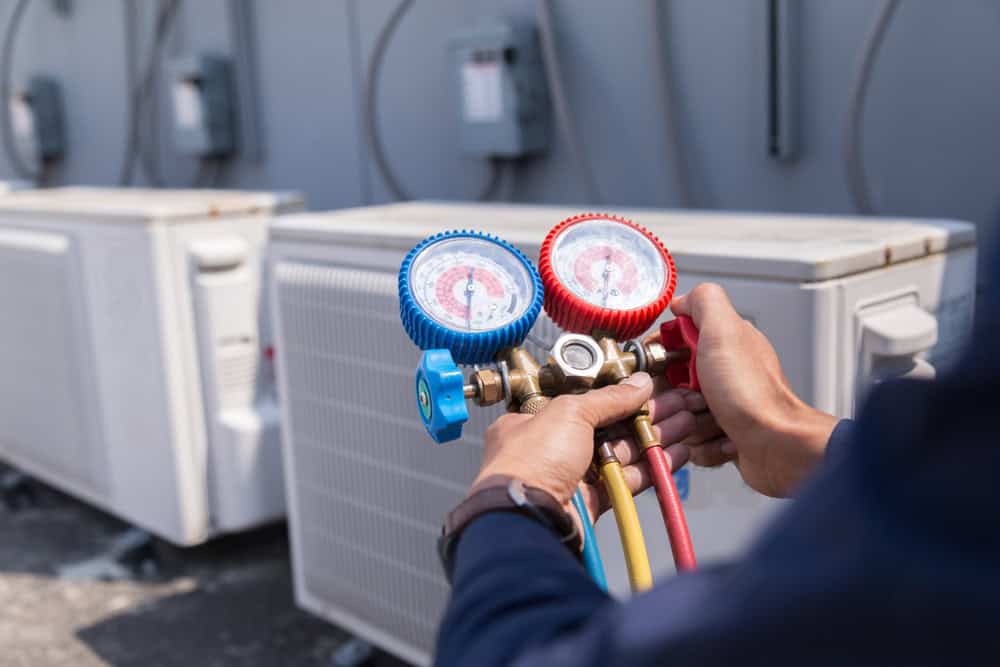
System sizing is one of the most misunderstood parts of choosing an HVAC system, and it’s also one of the most important. Too small, and your system will struggle to keep up, running nonstop and driving your energy bills through the roof. Too large, and it’ll short-cycle—turning on and off repeatedly without reaching the efficiency or comfort level you’re paying for. Neither scenario is good, and both are avoidable with proper planning.
The general rule is that you need about 25 BTUs (British Thermal Units) per square foot of space. So if you’ve got a 1,000-square-foot apartment, you’re looking at around 25,000 BTUs. But that’s just a starting point. If your space has high ceilings, lots of windows, poor insulation, or heavy sun exposure, you’ll need more capacity. If it’s well-insulated with newer windows and minimal direct sunlight, you might get away with less.
For commercial spaces in NYC, the calculation gets more detailed. You’re factoring in occupancy (add about 100 BTUs per person), the number of windows (add 1,000 BTUs per window), exterior doors, and any heat-generating equipment like ovens, servers, or manufacturing equipment. A proper load calculation—often called a Manual J calculation—takes all of this into account and gives you an accurate number. It’s not something you want to guess at.
In New York City, where buildings range from cramped studios to sprawling commercial properties, getting the size right is critical. Undersized systems are common in older buildings where upgrades were done without recalculating the load. Oversized systems are common in new installs where contractors just go bigger “to be safe.” Neither approach saves you money, and both cost you comfort. If you’re working with a knowledgeable HVAC contractor or supplier, they should be able to walk you through the sizing process and help you avoid these common mistakes.
System sizing is one of the most misunderstood parts of choosing an HVAC system, and it’s also one of the most important. Too small, and your system will struggle to keep up, running nonstop and driving your energy bills through the roof. Too large, and it’ll short-cycle—turning on and off repeatedly without reaching the efficiency or comfort level you’re paying for. Neither scenario is good, and both are avoidable with proper planning.
The general rule is that you need about 25 BTUs (British Thermal Units) per square foot of space. So if you’ve got a 1,000-square-foot apartment, you’re looking at around 25,000 BTUs. But that’s just a starting point. If your space has high ceilings, lots of windows, poor insulation, or heavy sun exposure, you’ll need more capacity. If it’s well-insulated with newer windows and minimal direct sunlight, you might get away with less.
For commercial spaces in NYC, the calculation gets more detailed. You’re factoring in occupancy (add about 100 BTUs per person), the number of windows (add 1,000 BTUs per window), exterior doors, and any heat-generating equipment like ovens, servers, or manufacturing equipment. A proper load calculation—often called a Manual J calculation—takes all of this into account and gives you an accurate number. It’s not something you want to guess at.
In New York City, where buildings range from cramped studios to sprawling commercial properties, getting the size right is critical. Undersized systems are common in older buildings where upgrades were done without recalculating the load. Oversized systems are common in new installs where contractors just go bigger “to be safe.” Neither approach saves you money, and both cost you comfort. If you’re working with a knowledgeable HVAC contractor or supplier, they should be able to walk you through the sizing process and help you avoid these common mistakes.
Once you understand your building’s needs and the right size system, the next step is choosing the type of HVAC system that fits. In NYC, the most common options are PTAC units, ductless mini-splits, central air conditioning paired with a furnace, and heat pumps. Each has strengths and trade-offs, and the right choice depends on your building layout, budget, and long-term goals.
PTAC units are popular in New York City for a reason. They’re affordable, easy to install, and don’t require ductwork. But they’re also the least efficient option. If you’re in a building where PTACs are already installed and you’re just replacing an old unit, sticking with a PTAC makes sense. But if you’re starting from scratch or have the option to upgrade, it’s worth considering more efficient alternatives that can save you money over time.
Mini-splits offer better efficiency, quieter operation, and more flexibility in placement. They’re ideal for older buildings, room additions, or spaces where running ducts isn’t practical. Heat pumps are another strong option, especially if you need both heating and cooling. Modern heat pumps work well even in cold climates, and they’re becoming the go-to choice for energy-conscious property owners. In fact, heat pumps outsold gas furnaces in the first half of 2025, reflecting a major shift toward electrification and efficiency in the HVAC market.
The debate between PTAC units and split systems comes up constantly in NYC, and the answer depends on what you’re optimizing for. If you need the cheapest upfront option and you’re working with a building that doesn’t have ductwork, PTACs are hard to beat. Installation costs can be 50% less than central air or mini-splits, and you don’t need permits or major construction work. For landlords managing multiple units or property owners on a tight budget, that’s a big deal.
But PTACs come with downsides. They’re noisier, less efficient, and they create more temperature swings throughout the day. They also have a shorter lifespan—typically 10 to 15 years compared to 15 to 20 for mini-splits or central systems. If you’re paying NYC electricity rates, which run about 38% higher than the national average, that efficiency gap adds up fast. A mini-split might cost more upfront, but it can save you 30% or more on cooling costs over its lifetime.
Split systems also offer better comfort. They’re quieter, they provide more consistent temperatures, and they don’t take up valuable wall space the way PTACs do. If you’re renovating, upgrading, or installing HVAC in a space where aesthetics and comfort matter—whether it’s a boutique office in Manhattan or a renovated brownstone in Brooklyn—mini-splits are usually the better long-term investment. But if you’re replacing an existing PTAC in a rental unit or a building where the infrastructure is already set up for through-wall units, sticking with a PTAC might be the most practical move.
The key is to weigh upfront cost against long-term performance. If you’re planning to stay in the building for years or you’re managing a property where tenant comfort impacts retention, investing in a more efficient system pays off. If you’re looking for a quick, budget-friendly replacement, PTACs get the job done. And if you’re dealing with an older building that has hard-to-find PTAC parts, working with a supplier that specializes in OEM components can save you time and frustration.

Energy efficiency isn’t just a buzzword—it’s the difference between a system that costs you $200 a month to run and one that costs $120. In HVAC, efficiency is measured by SEER ratings for cooling (Seasonal Energy Efficiency Ratio) and HSPF ratings for heating (Heating Seasonal Performance Factor). The higher the number, the more efficient the system. When you’re evaluating the best HVAC units for 2026, efficiency should be near the top of your list.
In New York, the minimum efficiency standard is 14 SEER or 13.4 SEER2 (the updated metric that more accurately reflects real-world performance). But minimum doesn’t mean optimal. High-efficiency systems can hit SEER ratings of 20 or higher, and while they cost more upfront, they can cut your cooling costs by 20% to 40% compared to older, less efficient units. That’s real money back in your pocket every month, especially during NYC’s hot, humid summers.
For NYC property owners, efficiency matters even more because of Local Law 97. Buildings over 25,000 square feet are required to meet strict carbon emissions limits starting in 2024, with even tougher standards kicking in by 2030. HVAC systems are the single biggest energy consumer in most buildings, accounting for up to 50% of total energy use. Upgrading to a high-efficiency, energy-efficient HVAC system in NYC isn’t just about saving on your utility bill—it’s about avoiding penalties that can run into the tens of thousands of dollars annually.
Heat pumps are particularly efficient because they transfer heat rather than generating it. Modern heat pumps can achieve heating efficiency levels of 300% to 500%, meaning they produce three to five times more energy than they consume. That’s a game-changer in a city where heating costs can dominate your winter budget. And with new refrigerant regulations taking effect in 2026—requiring low-GWP refrigerants like R-454B and R-32—the systems being installed now are designed to be cleaner, more efficient, and longer-lasting than ever before.
When you’re evaluating HVAC systems in NYC, don’t just look at the sticker price. Ask about SEER ratings, annual operating costs, and how the system will perform over its 15- to 20-year lifespan. The math usually favors efficiency, especially in a market like New York City where energy costs are high and regulatory pressure is only increasing.
Choosing the right HVAC system comes down to understanding your building, calculating the right size, comparing system types based on your needs, and factoring in long-term efficiency. It’s not about picking the cheapest option or the most expensive one—it’s about finding the system that fits your space, your budget, and your comfort goals while meeting NYC’s evolving energy standards.
If you’re working with an older building in the tri-state area, dealing with hard-to-find parts for legacy equipment, or trying to navigate Local Law 97 compliance, you need more than a catalog and a price list. You need expertise. You need someone who understands the quirks of NYC buildings, the differences between PTAC and split systems, and how to match equipment to your specific situation without overselling or overcomplicating the process.
We’ve been serving New York City, New Jersey, Long Island, and Pennsylvania for over 50 years. With more than 20,000 parts in stock and deep expertise in both modern and older HVAC systems, we’re equipped to handle everything from straightforward replacements to complex commercial installations. Whether you’re looking for one-on-one consultation, hard-to-find OEM parts, or guidance on choosing the best HVAC units for 2026, we offer the knowledge and selection to help you make a smart decision for your property.