Summary:
Your air conditioner just quit. It’s 90 degrees outside, and now you’re staring at a repair estimate wondering if you’re about to get taken for a ride.
You’re not alone in that feeling. Most people have no idea what AC repairs should actually cost, which parts matter, or when a technician is being straight with them versus padding the bill.
This breakdown shows you exactly where your repair dollars go, what fair pricing looks like in New York County, NY, and how to make the repair versus replacement call without second-guessing yourself. Let’s start with what actually makes up that final number.
What Makes Up Your Air Conditioner Repair Cost
Every repair bill has three main pieces: the diagnostic fee, the labor, and the parts. Understanding each one helps you spot whether a quote is reasonable or inflated.
The diagnostic fee covers the technician’s time to figure out what’s wrong. In New York County, NY, expect $70 to $200 for this. Most reputable companies credit this toward your repair if you move forward.
Labor is where location matters most. HVAC technicians in Manhattan charge $50 to $150 per hour, with some projects hitting the higher end due to union rates and building access challenges. A simple fix might take an hour. Complex repairs can run three to four hours or more.
Parts vary wildly depending on what failed. A capacitor costs $15 to $80 for the part itself. A compressor can run over a thousand. Age matters here too—parts for older systems cost more and take longer to source, which is why having access to a supplier with deep inventory makes a real difference.
HVAC Capacitor Replacement Cost
Capacitor failure is the most common AC repair, and for good reason. This small component stores and releases energy to start your compressor and fan motors. When it goes bad, your system hums but won’t start, or it struggles to keep up on hot days.
The part itself runs $15 to $80 depending on whether you need a single-run or dual-run capacitor. Dual-run units cost more because they power both the compressor and the fan. The real cost comes from labor and the service call.
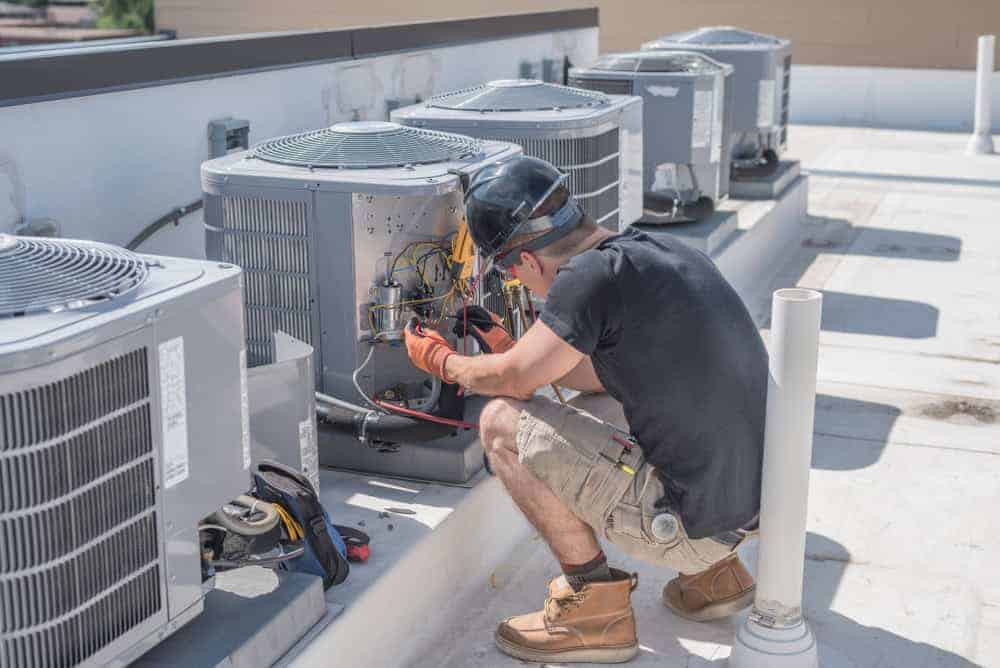
Total capacitor replacement typically runs $100 to $400 in most markets, with New York often landing on the higher end of that range. The job itself takes 30 to 60 minutes for a trained tech. They’ll discharge the old capacitor—critical for safety—swap in the new one, and test the system to confirm proper operation.
If you’re quoted significantly more than $400 for a straightforward capacitor swap, ask for a breakdown. Some companies bundle in “system checks” or other services that inflate the bill. A transparent company will explain exactly what you’re paying for without the runaround.
Capacitors typically last five to ten years, but extreme heat and power surges shorten their lifespan. If your system is older and you’re replacing the capacitor for the second or third time, that’s a signal to start thinking about the bigger picture. The capacitor itself is cheap to fix, but repeated failures often mean other components are wearing out too.
Common AC Repair Costs You Should Know
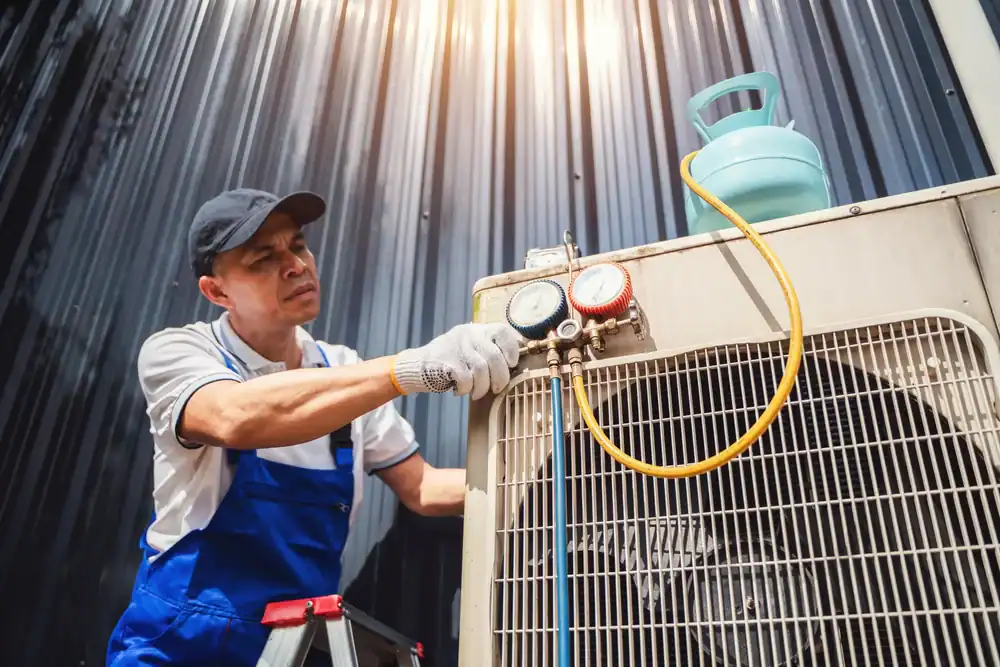
Beyond capacitors, a handful of repairs come up often enough that you should know what they cost. Refrigerant leaks are a big one. If your AC isn’t cooling properly and you hear hissing sounds, you likely have a leak. Detection and repair run $200 to $1,600 depending on where the leak is and how much refrigerant you need to recharge the system.
Here’s the thing about refrigerant: adding more without fixing the leak is pointless. It’ll just leak out again. A good tech will find the source, repair it, then recharge the system properly. If your system uses R-22 refrigerant—the older type that was phased out in 2020—costs are even higher because supply is limited and prices keep climbing.
Compressor replacement is on the expensive end. Expect $1,200 to $2,500 or more for parts and labor. The compressor is the heart of your cooling system, and when it fails, you’re often looking at a repair-versus-replace decision. If your system is over ten years old and the compressor dies, replacement usually makes more sense financially.
Blower motor issues fall somewhere in the middle. A failed blower motor costs $400 to $1,500 to replace. You’ll notice this problem when air stops moving through your vents even though the system is running. It’s a critical repair but not necessarily a system-killer if your unit is relatively young.
Thermostat problems are often the cheapest fix. A faulty thermostat runs $100 to $300 to replace, and sometimes the issue is as simple as dead batteries or incorrect settings. Before you pay for a service call, check the basics—fresh batteries, correct mode settings, and make sure it’s not in direct sunlight which can throw off the readings.
Drain line clogs are another common issue, especially in humid climates. When your condensate drain gets clogged with algae or debris, water backs up and can trigger a safety switch that shuts down your system. Clearing a drain line typically costs $150 plus the diagnostic fee. It’s preventable with regular maintenance, which is why annual tune-ups actually save money in the long run.
Furnace Repair Cost and What Affects It
Furnace repairs follow a similar cost structure to AC work—diagnostic fee, labor, and parts. Average furnace repair costs run $150 to $1,000 depending on what’s broken and how old your system is.
The type of furnace matters. Gas furnaces are most common and generally cost less to repair than oil furnaces. Electric furnaces fall somewhere in between. Parts availability plays a role here too, especially for older units or less common brands.
Location and timing affect furnace repair costs just like AC work. Emergency calls in the middle of a cold snap will cost more—sometimes double the standard rate. If you can wait until normal business hours, you’ll save money. But if your furnace is out and temperatures are dropping, safety comes first.
Typical Furnace Repair Costs Broken Down
Ignitor or pilot light issues are common and relatively affordable. Expect $150 to $350 for this repair. If your furnace won’t start or the burner won’t light, this is often the culprit. It’s a straightforward fix that doesn’t require major disassembly.
Blower motor problems cost more because the motor does double duty—it moves air for both heating and cooling. Replacement runs $400 to $800. Signs include weak airflow, strange noises, or the system running constantly. The blower motor is essential, so this repair can’t wait.
Cracked heat exchangers are serious. This isn’t just about comfort—it’s a safety issue. A cracked heat exchanger can leak carbon monoxide into your home. Repair costs run $800 to $1,500, but here’s the reality: if your heat exchanger is cracked and your furnace is over ten years old, most pros will recommend replacement. The heat exchanger is expensive to replace, and if it’s failing, other components are likely on their way out too.
Thermostat issues affect furnaces just like they do air conditioners. Replacement costs $100 to $300. Before you replace it, verify the problem is actually the thermostat and not something else in the system. A good technician will test the thermostat first before recommending replacement.
Electrical problems and wiring failures require licensed technicians and run $200 to $600. These repairs involve safety risks, so this is never a DIY situation. Faulty wiring can cause system failures, frequent cycling, or even fire hazards. If your furnace trips the breaker repeatedly or you smell burning, shut it down and call for service immediately.
Flame sensor cleaning or replacement is on the cheaper end at $100 to $250. The flame sensor detects whether the burner is lit. When it gets dirty or fails, your furnace won’t stay running. Sometimes cleaning is enough, but if the sensor is damaged, replacement is straightforward and inexpensive.

When Furnace Repair Makes Sense vs Replacement
The decision to repair or replace a furnace follows similar logic to air conditioners, but the age threshold is different. Furnaces typically last 15 to 25 years compared to 12 to 15 for AC units. If your furnace is under ten years old and the repair is under $500, repair almost always makes sense.
Use the $5,000 rule as your guide. Multiply the age of your furnace by the cost of the repair. If the result exceeds $5,000, replacement is usually smarter. Example: your furnace is 12 years old and needs an $800 repair. That’s $9,600, which signals it’s time to replace rather than pour money into an aging system.
Frequent repairs are another red flag. If you’ve called for service three or more times in the past three years, your furnace is telling you something. Those repair costs add up, and you’re likely facing more breakdowns soon. At that point, investing in a new, efficient system makes more financial sense than continuing to patch an unreliable one.
Efficiency matters too. Older furnaces with an AFUE rating below 80% waste a lot of energy. New models hit 90% to 98% efficiency, which translates to lower monthly heating bills. If your furnace is old and inefficient, the energy savings from a new unit can offset the replacement cost over time.
Safety issues override all other considerations. If your technician finds a cracked heat exchanger, carbon monoxide concerns, or gas leaks, replacement isn’t optional—it’s necessary. No amount of money saved on a repair is worth risking your family’s safety. In these cases, the decision is made for you.
Finally, consider your plans. If you’re staying in your home for seven or more years, a new furnace makes sense because you’ll recoup the investment through lower energy bills and avoided repair costs. If you’re selling soon, a basic repair might be enough to get you through. But be aware that home buyers often ask about HVAC age, and an old furnace can affect your sale price or negotiations.
Making the Right Call on Your HVAC Repair
Understanding repair costs is half the battle. The other half is finding someone who’ll give you straight answers without pushing you toward the most expensive option.
Fair pricing means transparent breakdowns—diagnostic fee, labor hours, parts cost, and nothing hidden in fine print. It means explaining why a repair costs what it does and whether it makes sense given your system’s age and condition. And it means having access to the parts you need without weeks of waiting or inflated special-order fees.
When you’re facing a repair decision, you want someone who knows older systems as well as new ones, who can actually source the parts others can’t find, and who’ll walk you through your options without the pressure. That’s where decades of experience and a massive parts inventory make a real difference.
If you’re dealing with a breakdown or trying to figure out whether that quote you got is fair, we bring over 50 years of HVAC knowledge to the table. Our team understands what you’re up against, and we’re built to help you make the right call for your situation—not just the most profitable one for us.