Summary:
Your HVAC system just stopped working, and you’re staring at a quote that could mean anything from a quick fix to a major investment. The gap between a $500 repair and a $5,000 replacement isn’t arbitrary—it comes down to what actually failed, how old your system is, and whether the fix will hold or just buy you a few more months of borrowed time. In New York County, where labor costs run higher and access challenges add complexity, understanding what drives HVAC repair costs helps you separate necessary work from unnecessary upsells. This guide walks you through real repair costs, the factors that influence pricing, and the decision framework that helps you determine whether repair or replacement makes sense for your situation. Let’s start with what typically falls into the lower end of the cost spectrum.
What Minor HVAC Repairs Actually Cost
Minor HVAC repairs in New York County typically run between $100 and $600, covering the kinds of issues that stop your system from running but don’t require replacing major components. These are the repairs where labor and diagnostic time make up most of the bill, with parts costs staying relatively low.
Common minor repairs include replacing capacitors, cleaning clogged drain lines, fixing thermostat issues, replacing air filters, and addressing basic electrical connections. A capacitor replacement might cost $120 to $400. Cleaning a condensate drain line usually falls between $75 and $250. These fixes are straightforward, and most technicians can complete them in a single visit with parts already on their truck.
The reason these repairs stay affordable is simple—the parts are inexpensive and readily available, and the labor involved is measured in minutes or a couple of hours, not full days. When you’re quoted in this range, you’re typically looking at a repair that extends your system’s life without requiring you to make a replace-or-repair decision.
AC Leak Repair Cost and What Drives It Higher
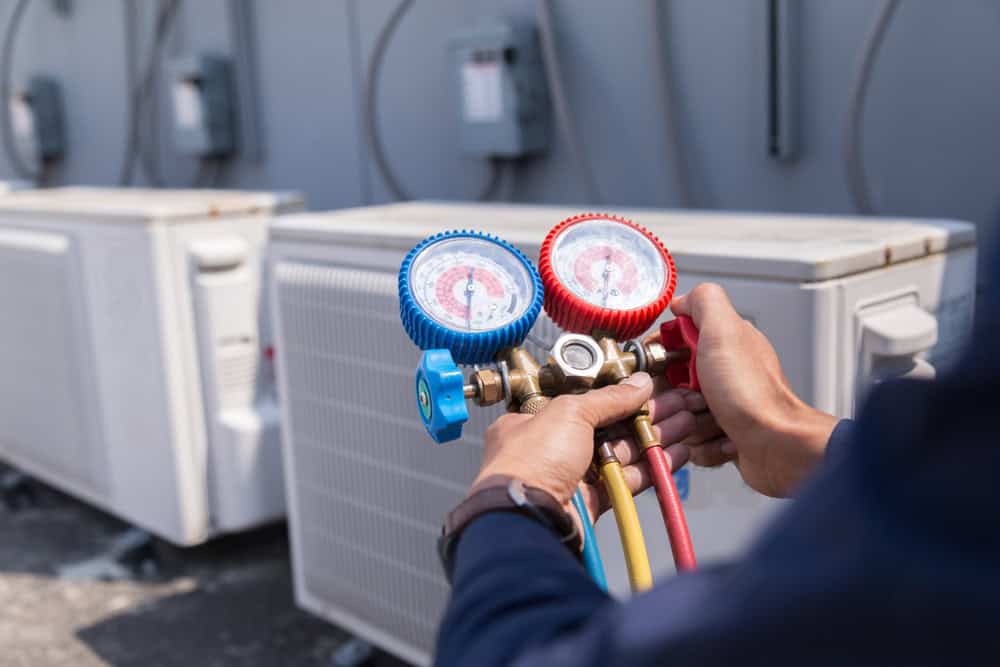
AC leak repair costs sit in the middle of the repair spectrum, ranging from $250 to $1,600 depending on where the leak is located and what caused it. The wide range exists because not all leaks are equal—some can be sealed quickly, while others require replacing entire components.
Refrigerant leaks typically occur in the evaporator coil, condenser coil, or refrigerant lines. If the leak is in an accessible refrigerant line, a technician might be able to seal it and recharge the system for $200 to $500. But if the leak is in the evaporator coil—which sits inside your air handler—the repair becomes more involved. Evaporator coil replacement can run $1,000 to $2,500 if your system is still under warranty, or $2,500 to $4,500 if it’s not.
The type of refrigerant your system uses also impacts cost significantly. If your AC uses R-22 refrigerant, which has been phased out, refilling it costs $180 to $600 compared to $100 to $320 for newer R-410A systems. Many technicians will recommend replacement over repair for older R-22 systems because the refrigerant itself is expensive and difficult to source, and an aging system that’s leaking once will likely leak again.
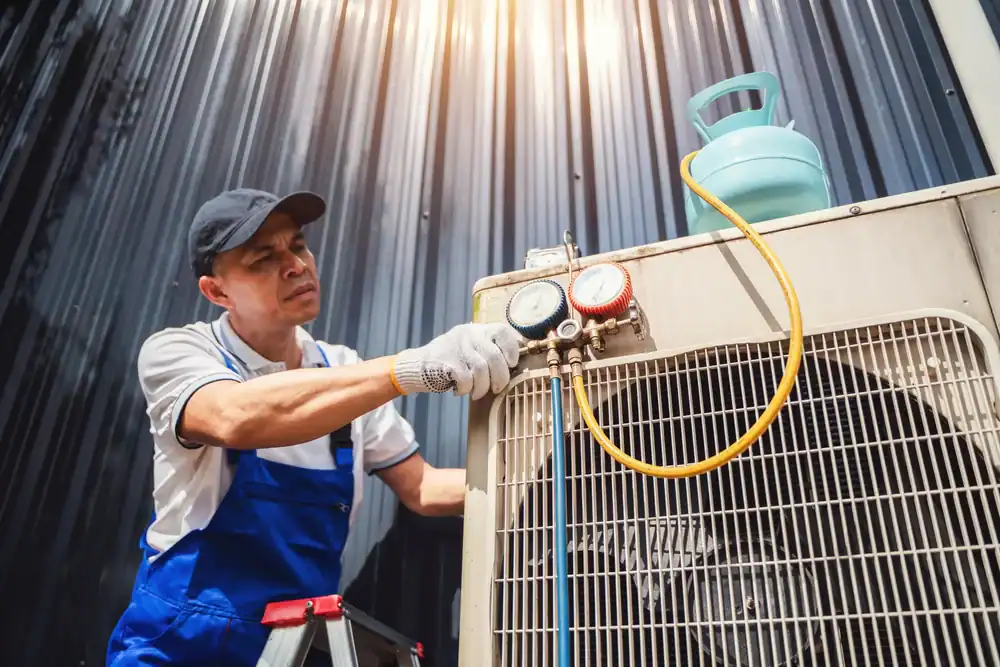
Labor makes up a substantial portion of leak repair costs. Finding the leak requires specialized detection equipment and can take an hour or more. Then there’s evacuating the system, making the repair, pressure testing, and recharging the refrigerant—all of which requires EPA certification and specialized tools. In New York County, where HVAC labor runs $75 to $150 per hour, a leak repair that takes three to four hours can easily hit $800 to $1,200 even before factoring in refrigerant costs.
Age matters here too. If your system is over 10 years old and develops a refrigerant leak, you’re often better off replacing the unit rather than pouring money into a repair that doesn’t address the underlying wear and corrosion that caused the leak in the first place.
When Labor Costs Outweigh Parts Costs
In New York County, labor accounts for 40% to 90% of your total HVAC repair bill, which means understanding how labor costs work helps you evaluate whether a quote is fair. HVAC contractors in the area charge between $50 and $150 per hour, with Manhattan rates typically running 10% to 20% higher than surrounding boroughs due to access challenges, parking difficulties, and building management coordination.
Some repairs are labor-intensive even when the parts are cheap. Replacing a blower motor might only require a $200 part, but if the technician needs to disassemble significant portions of your air handler to access it, you could be looking at three to four hours of labor. That pushes a $200 part into a $700 to $900 total repair cost.
Access complexity drives labor costs up in ways that don’t always show up in the initial quote. If your condenser is on a rooftop and requires coordinating building access, freight elevator time, or working around strict building management schedules, expect labor costs to climb. Some Manhattan buildings require permits for HVAC work, adding another $130 to $500 to the project before any actual repair work begins.
Emergency service calls cost more—typically $150 to $300 above standard rates. If your system fails on a weekend or after hours and you need immediate service, you’re paying a premium for that availability. This is where having a relationship with a reliable HVAC provider pays off, because regular customers often get priority scheduling without emergency surcharges.
The labor component also explains why some repairs make sense and others don’t. If a technician quotes you $1,200 to replace a component on a 15-year-old system, and $800 of that is labor, you’re essentially paying someone to install a new part on aging equipment that could fail again next month. That’s when the repair-versus-replace calculation starts tilting toward replacement.
Understanding the labor breakdown helps you ask better questions. When you get a quote, ask how much is parts and how much is labor. Ask how long the repair will take. Ask whether the technician has the parts in stock or needs to order them, because waiting for parts means paying for a second service call. These questions help you understand whether you’re being quoted fairly or whether the price reflects unnecessary complexity.
AC Condenser Replacement Cost Breakdown
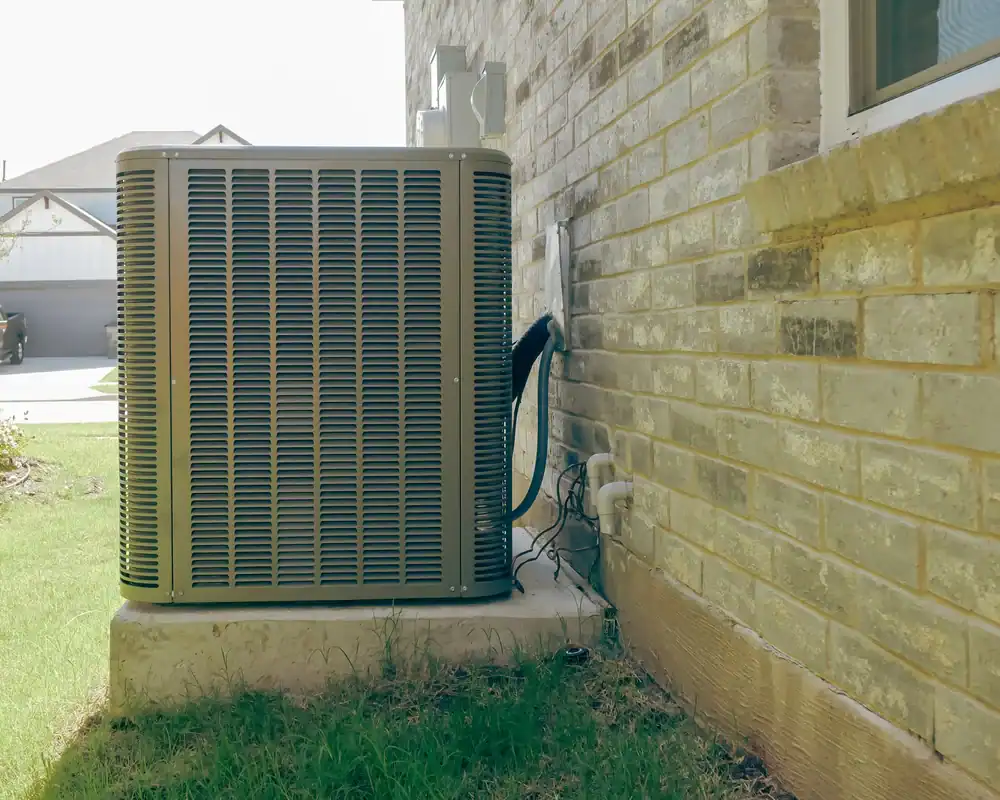
AC condenser replacement costs range from $1,300 to $6,100 in the New York area, with most homeowners paying around $2,900 for a standard residential system. The condenser is the outdoor unit that releases heat from your home, and when it fails, you’re looking at one of the more expensive HVAC repairs.
The wide price range comes down to condenser size, efficiency rating, and whether your system is still under warranty. A basic 2-ton unit with standard efficiency sits at the lower end of the range, while a 5-ton high-efficiency system with a premium SEER rating pushes you toward the upper limit. Labor accounts for roughly 40% to 60% of the total cost, and in New York County where HVAC professionals charge $100 to $250 per hour, that labor component adds up quickly.
If your condenser is still under warranty, you might only pay for labor—typically $300 to $1,500. If the warranty has expired, you’re covering both equipment and installation, which is where costs climb into the $2,500 to $5,000 range for most residential systems.
What Size and Efficiency Do to the Price
Condenser size is measured in tons, which refers to how much heat the unit can remove in a given time, not the physical weight. Residential condensers range from 1.5 to 5 tons, and each step up in size means a more powerful—and more expensive—unit.
A 1.5-ton condenser replacement might cost $1,300 to $2,200. A 2.5-ton unit runs $1,800 to $3,200. A 4-ton system typically falls between $2,500 and $4,500. The gap isn’t just about the condenser itself—larger units are heavier to position, hold more refrigerant, and require larger electrical connections with higher amperage dedicated circuits. A 1.5-ton condenser weighs around 100 pounds, while a 5-ton unit can exceed 250 pounds, often requiring a two-person crew and additional rigging time.
Efficiency ratings add another layer to the cost calculation. SEER ratings measure how efficiently your AC converts electricity into cooling. A basic 14 SEER unit costs significantly less than an 18 or 20 SEER model, but the higher-efficiency unit will reduce your monthly energy bills. In New York County, where cooling costs can run high during humid summers, that efficiency difference can add up to hundreds of dollars annually.
The refrigerant type also matters. If your old system used R-22 refrigerant and you’re replacing just the condenser, you’ll need to ensure the new unit is compatible—or more likely, you’ll need to replace the entire system to move to R-410A refrigerant. This compatibility issue is why many contractors recommend full system replacement rather than condenser-only replacement on systems over 10 years old.
Brand choice impacts price too. Premium brands like Carrier and Trane typically cost 20% more than mid-range options, while budget brands run about 10% less. But brand also affects parts availability, warranty coverage, and long-term reliability. Working with a supplier that stocks a wide range of brands and has deep knowledge of both new and older systems means you get options that fit your budget without sacrificing quality.
Timing your replacement matters. If you need a condenser replaced during peak summer demand, expect to pay premium pricing. Scheduling the work in spring or fall can save 15% to 30% on labor costs simply because demand is lower and contractors have more flexibility in their schedules.

HVAC Compressor Replacement Cost and When It Makes Sense
HVAC compressor replacement costs average $1,200 nationally, with most homeowners paying between $800 and $2,300 depending on unit type, brand, size, and warranty status. In New York County, where labor costs run higher, expect to be on the upper end of that range. If your compressor is still under warranty, you’ll pay $600 to $1,200 for labor. If the warranty has expired, you’re looking at $1,300 to $2,500 for the complete repair.
The compressor is essentially the heart of your HVAC system—it pumps refrigerant through the system to enable heat transfer. When it fails, your AC stops cooling entirely. Compressor failure is often caused by refrigerant leaks, electrical issues, or simply age and wear. The problem is that compressor replacement is expensive enough that it often triggers the repair-versus-replace decision.
Labor for compressor replacement runs $75 to $150 per hour, or a flat fee between $300 and $900. The job typically takes four to six hours because the technician needs to evacuate the refrigerant, disconnect electrical connections, remove the failed compressor, install the new one, reconnect everything, vacuum the system, and recharge it with refrigerant. Each of these steps requires specialized tools and EPA certification.
The size of your AC unit significantly impacts compressor cost. A compressor for a 1.5-ton unit might cost $500 to $800, while a compressor for a 4-ton system can run $1,200 to $1,800 just for the part. Add labor, refrigerant, and any additional components that need replacing—like capacitors or contactors—and you’re quickly approaching $2,000 to $2,500 for the complete repair.
Here’s where the decision gets tricky. If your AC is over 10 years old and the compressor fails, many HVAC professionals will recommend replacement over repair. The reasoning is straightforward—you’re about to spend $1,500 to $2,500 installing a new compressor in an aging system where other components could fail next month. The evaporator coil, condenser coil, and various electrical components have all been running for the same 10+ years, and they’re all approaching end-of-life at roughly the same time.
The $5,000 rule provides a useful framework here. Multiply your system’s age by the repair cost. If the result exceeds $5,000, replacement typically makes more financial sense than repair. A $1,800 compressor replacement on a 12-year-old system gives you $21,600—well over the threshold. That same $1,800 repair on a 4-year-old system gives you $7,200, which is closer to the line but might still justify repair if the rest of the system is in good condition.
Warranty status changes the calculation entirely. If your compressor is covered under a 10-year parts warranty, you’re only paying for labor—maybe $600 to $1,200. That makes repair the obvious choice regardless of system age, assuming the rest of the system is functional. But once that warranty expires, the economics shift heavily toward replacement, especially on systems approaching or exceeding 10 years old.
Making the Right Repair vs Replace Decision
HVAC repair costs in New York County range from $100 for simple fixes to $5,000+ for major component replacements, and knowing where your situation falls in that spectrum helps you make confident decisions. Minor repairs—capacitors, drain lines, thermostats—almost always make sense. Major component replacements on aging systems require more careful evaluation using frameworks like the $5,000 rule and the 30% cost threshold.
The key is working with an HVAC provider who gives you transparent pricing upfront, has access to the parts you need without delays, and provides honest guidance about whether repair or replacement serves your best interests. For over 50 years, we’ve helped commercial and residential customers in the Tri-State area navigate these decisions with a combination of deep system knowledge, extensive parts inventory, and a commitment to straightforward consultation.
When your HVAC system fails, you need answers fast—not upsells, not guesswork, just clear information about what failed, what it costs to fix, and whether that fix makes sense given your system’s age and condition. That’s the approach that keeps systems running efficiently and customers confident in their investment.