Summary:
You’re about to spend thousands on an hvac replacement. The system matters, sure. But here’s what most Manhattan property owners miss until it’s too late: the contractor you hire determines whether that warranty is worth anything when something breaks.
Unlicensed contractors void manufacturer warranties. Period. Trane won’t cover it. Carrier won’t touch it. Lennox will deny your claim. You’ll be stuck paying out of pocket for repairs that should’ve been free.
The questions below separate contractors who protect your investment from those who put it at risk. If they can’t answer these clearly and without hesitation, you’re talking to the wrong company. Let’s start with the one question that matters most.
What's Your License Number and Can I Verify It Right Now
This should be the easiest question they answer all day. In New York County, HVAC contractors need proper licensing from the NYC Department of Buildings. Not a business license. Not a general contractor number. An actual HVAC license that proves they’re qualified to install, repair, and service heating and cooling equipment.
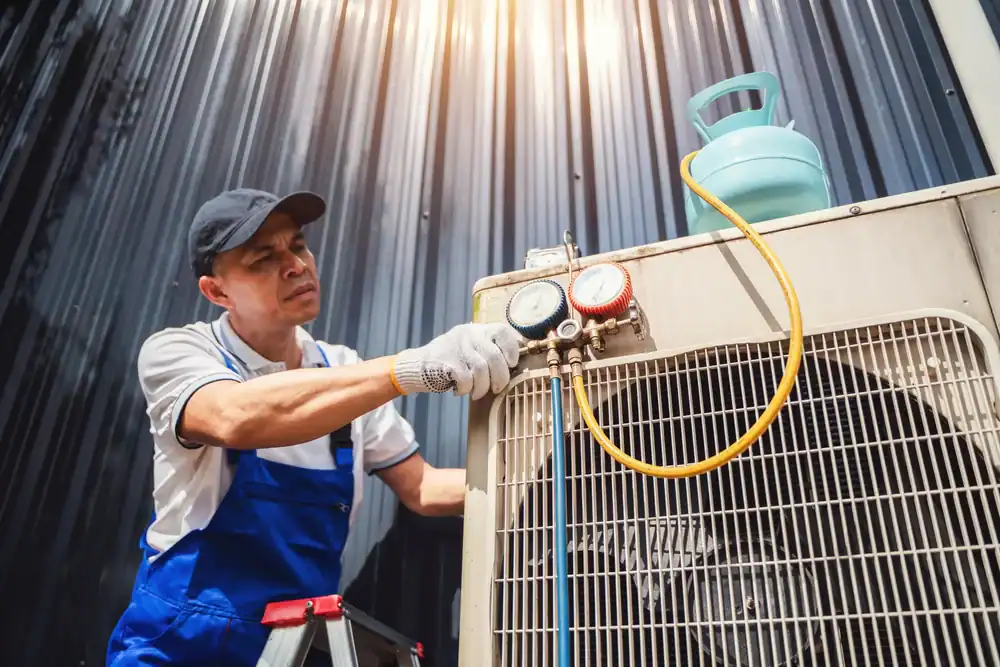
Here’s why this matters more in Manhattan than almost anywhere else. When an unlicensed contractor installs your system, your manufacturer warranty becomes void the moment they finish the job. You won’t know it until something breaks and you file a claim. That’s when you discover you’re on the hook for a $3,000 compressor replacement that should’ve been covered.
Licensed contractors display their credentials without hesitation. They’ll give you the number and expect you to verify it. That’s what smart property owners do, and professional contractors respect that diligence.
Why Manhattan HVAC Licensing Protects More Than Your Warranty

New York doesn’t issue statewide HVAC licenses. Individual municipalities handle licensing requirements, and Manhattan’s standards are among the strictest. The NYC Department of Buildings requires contractors to prove their technical knowledge, pass written and practical exams, and maintain proper insurance coverage before they can legally work on HVAC systems.
When you work with a properly licensed contractor, you’re getting more than a piece of paper. You’re getting someone who understands load calculations for your specific building type. Someone who knows which permits are required for your installation. Someone who can navigate co-op board requirements and coordinate with building management without turning your hvac replacement project into a three-month ordeal.
Licensed contractors can also pull the necessary permits. That matters because unpermitted work creates liability issues if you ever sell your property. It also means no city inspector verified the installation was done correctly. You’re trusting the contractor’s word that everything meets code, with no independent verification to back it up.
The best heating and air company won’t just have a license. We have decades of experience working specifically in Manhattan’s unique building environment. We know how to handle freight elevator scheduling, street access restrictions, and the coordination required for rooftop installations. That experience translates directly into fewer delays, lower costs, and installations that actually work the way they’re supposed to from day one.
Ask for the license number. Write it down. Then verify it through the NYC Department of Buildings website before you sign anything. Takes five minutes. Could save you thousands. If a contractor gets defensive about this request or makes excuses about why they can’t provide it immediately, that tells you everything you need to know.
What Happens When You Skip the License Verification
Property owners who skip this step usually discover their mistake at the worst possible time. Your system breaks down during a July heat wave. You file a warranty claim with the manufacturer. They ask for proof of installation by a licensed contractor. You can’t provide it. Claim denied.
Now you’re paying full price for repairs that should’ve cost you nothing. A compressor replacement that would’ve been free under warranty suddenly costs $2,500 out of pocket. A refrigerant leak that should’ve been covered becomes an $800 expense. Over the 15-20 year life of your system, this adds up to thousands in unnecessary costs that eat away at any discount you got from that unlicensed contractor.
There’s another problem most people don’t consider until it’s too late. Unlicensed contractors often source equipment through unauthorized channels. That means you might be getting refurbished units sold as new, or equipment that was never intended for your market. These units rarely come with valid manufacturer warranties in the first place. You think you’re covered, but you never were.
Insurance companies also care about licensing when something goes wrong. If an unlicensed contractor causes property damage during installation – water damage from a botched connection, structural issues from improper mounting, damage to neighboring units – your homeowner’s policy might not cover it. You could be personally liable for repairs that run into tens of thousands of dollars.
The nearest heating and cooling company isn’t always the best choice when they’re not properly licensed. Distance doesn’t matter nearly as much as credentials. A licensed contractor from across town who protects your warranty beats an unlicensed neighbor who voids it every single time. Manhattan projects already cost 10-20% more than work in other boroughs due to logistics and access challenges. Don’t compound that premium by hiring someone who puts your entire investment at risk to save a few hundred dollars upfront.
Show Me Your Insurance Certificate and Explain What It Covers
A contractor who hesitates on this question is a contractor you don’t want in your building. Proper insurance coverage protects you from financial liability when things go wrong during installation or repair work. And in Manhattan’s dense building environment where HVAC work often involves rooftop installations, crane operations, and navigating tight spaces in century-old buildings, there are plenty of ways things can go wrong.
You need to see two types of coverage: general liability and workers’ compensation. General liability covers property damage. If a technician drops a compressor through your ceiling or damages a neighboring unit’s wall during installation, their insurance pays for repairs. Workers’ compensation covers medical expenses and lost wages if someone gets injured on your property during the hvac replacement work.
Without this coverage, you’re personally liable for those costs. That’s not a theoretical risk in a place like New York County where buildings are stacked close together and one contractor’s mistake can impact multiple units.
The Real Cost of Inadequate Insurance Coverage
Here’s a scenario that plays out more often than it should in Manhattan. An underinsured contractor damages a water line during installation. Water floods your unit and two units below you. The damage estimate comes back at $45,000 for repairs, replacement of damaged property, and temporary housing for displaced residents. The contractor doesn’t have adequate insurance to cover it.
Who pays? You do. Your homeowner’s insurance might cover some of it after you pay a significant deductible, but you’ll likely see your premiums increase for years. You might also face liability claims from your neighbors for their damaged property and belongings. All because you didn’t verify insurance coverage before work began.
Manhattan’s building density makes this risk even more significant than in other markets. When contractors work on your HVAC system, they’re often in close proximity to other units, shared infrastructure, and building systems that serve multiple properties. A mistake doesn’t just affect your space. It can impact an entire floor or building, multiplying your potential liability.
Licensed contractors carry proper insurance because we understand these risks from experience. We’ve seen what happens when installations go wrong, and we’ve structured our business to protect both ourselves and our clients. That protection is worth far more than any discount an underinsured contractor might offer on your hvac replacement project.
Ask to see current certificates of insurance. Don’t accept expired documents or promises that coverage is “in process.” The certificate should list coverage amounts that are adequate for the scope of your project. For most residential work in Manhattan, you want to see general liability coverage of at least $1 million per occurrence.
Also verify that the insurance is actually active right now. Some contractors will show you a certificate from a policy that lapsed months ago. Call the insurance company listed on the certificate and confirm the policy is current and in good standing. This takes five minutes and could save you tens of thousands of dollars in personal liability.
How Insurance Protects Your HVAC Replacement Investment
Beyond protecting you from liability, proper insurance coverage tells you something important about the contractor’s business practices. Companies that maintain comprehensive insurance are established businesses with something to lose. We’ve invested in protecting our reputation and our clients. We’re not fly-by-night operators working out of a van with a cell phone.
Insurance companies vet contractors before issuing policies. They verify licensing, check for complaints and claims history, and assess the contractor’s training and safety practices. When a contractor carries proper insurance, an independent third party has already done some of the due diligence work for you. That’s valuable verification you don’t get from online reviews or word-of-mouth recommendations alone.
This becomes especially important when you’re evaluating hvac replacement specials and promotional pricing. Some contractors offer prices that seem too good to be true because they’re cutting corners on insurance coverage. They’re betting they won’t have any accidents or property damage, and passing those “savings” on to you in the form of lower prices. When that bet doesn’t pay off, you’re the one who loses.
The best heating and air company doesn’t just carry insurance. We proactively provide certificates before you even ask. We understand that property owners in Manhattan are sophisticated buyers who know to verify credentials. We make the verification process easy because we have nothing to hide and everything to prove.
Compare this to contractors who get defensive when you ask about insurance. They’ll tell you they’ve been doing this for years without any problems. They’ll assure you nothing will go wrong. They’ll try to redirect the conversation back to their low prices. These are red flags that should end the conversation immediately, before you waste more time on someone who isn’t qualified.
Your HVAC system represents a significant investment. In Manhattan, residential systems typically cost $5,000 to $15,000 depending on the size and complexity of your space. Commercial installations can run significantly higher. That’s not the time to work with a contractor who doesn’t carry proper protection for both of you. The insurance verification takes minutes. The peace of mind lasts for the entire life of your system.
Protecting Your Investment Starts With the Right Questions
An hvac replacement is one of the most significant investments you’ll make in your Manhattan property. The contractor you choose determines whether that investment pays off with years of reliable comfort or becomes a source of ongoing problems, unexpected costs, and voided warranties. These questions aren’t about being difficult. They’re about protecting yourself from contractors who aren’t qualified to do the work properly.
Licensed contractors answer these questions easily because we have nothing to hide. We understand that educated property owners ask for verification, and we respect that diligence. We provide license numbers, insurance certificates, and clear explanations because that’s what professional contractors do when we have the credentials and experience to back up our work.
Brothers Supply has been serving Manhattan property owners for over 50 years with the kind of technical expertise and industry knowledge that comes from working exclusively in New York County’s unique building environment. Our certified technicians understand both new and older HVAC systems, carry proper licensing and insurance, and bring the specialized knowledge required to protect your warranty and your investment from day one.