Summary:
You’re staring at three quotes for the same AC installation. One’s $5,000. Another’s $9,000. The third is $14,000, and the contractor spent 20 minutes asking questions about your building before even mentioning price.
One says permits aren’t necessary. Another says they’ll “handle everything.” The third walks you through exactly what the DOB requires and why it matters.
Here’s what separates AC installation that protects your investment from work that creates expensive problems down the road. We’ll cover warranty compliance, NYC permit requirements, proper sizing, and the mistakes that turn a straightforward installation into a multi-thousand-dollar headache.
Air Conditioning Installation: What Actually Protects Your Warranty
Your new $8,500 Trane system just had a compressor failure at three months. You call for warranty service. That’s when the manufacturer tells you the installation voided your coverage.
This scenario plays out more often than most people realize. Trane, Carrier, and Lennox all require professional installation by licensed contractors. The warranty documents spell it out clearly: improper installation voids coverage. That means if components aren’t matched correctly, if refrigerant lines aren’t installed to spec, or if electrical connections don’t meet code, you’re paying for repairs that should’ve been free.
Registration is the other trap. Most manufacturers give you 60 to 90 days from installation to register your equipment. Miss that window, and Trane’s 10-year registered warranty drops to five years. Carrier does the same. Some manufacturers cut coverage even further or deny it entirely. Your installer should register equipment for you, but it’s worth confirming they actually submitted the paperwork.
HVAC Installation Services: Why Contractor Licensing Matters in Manhattan
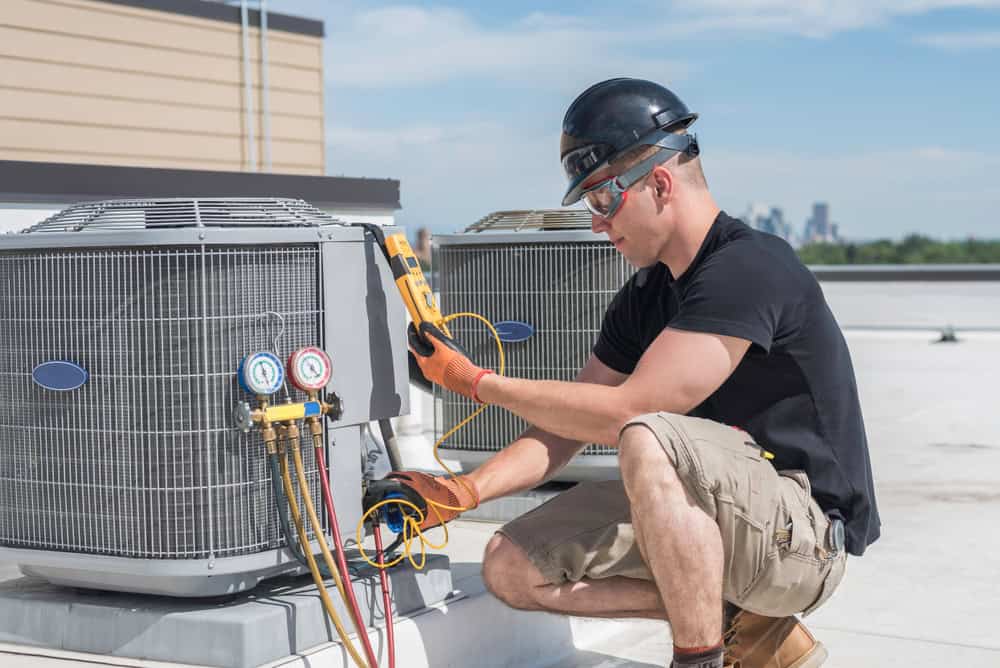
HVAC installation in New York County isn’t just about connecting equipment and turning it on. It’s about navigating Department of Buildings requirements, understanding which systems need permits, and installing equipment that satisfies both manufacturer specifications and NYC code.
Most installations in Manhattan require DOB permits. That includes new heating systems, central air conditioning modifications, ductwork changes, and mini-split systems over three tons or 36,000 BTU. Small window units under three tons that fit in existing sleeves don’t need permits. Pretty much everything else does.
Only licensed contractors can pull those permits. If your installer isn’t properly licensed, you’re left with unpermitted work. That means DOB violations, fines starting at $2,500 and climbing from there, plus daily penalties until you bring everything up to code. The cost of fixing unpermitted work typically runs two to three times what proper permitting would’ve cost upfront.
Licensed contractors also know how to size systems correctly. An oversized unit short-cycles, running in quick bursts that waste energy and stress components. An undersized unit runs constantly, never quite catching up and burning itself out faster. Proper sizing requires Manual J load calculations based on your building’s square footage, insulation quality, window count, ceiling height, and typical occupancy. It’s technical work, not guesswork.
The other advantage is access to OEM parts. Manufacturer warranties require original equipment parts for any repairs. Install a generic compressor or use an off-brand coil, and you’ve voided your warranty even if the part works fine. Contractors with established supplier relationships get OEM parts faster and keep your coverage intact.
AC Installation Company: What Separates Real Expertise from Sales Pitches
The lowest quote usually signals problems you’ll pay for later. Low bids mean corners get cut somewhere—skipped permits, mismatched components, rushed installations without proper testing, or unlicensed labor.
Contractors who protect your investment ask detailed questions before quoting. How old is your building? What’s the current ductwork situation? Are there access challenges for equipment or installation crews? What’s your usage pattern? If they’re giving you a firm number over the phone without seeing the space, they’re guessing.
They explain permit requirements without you having to ask. If DOB permits are needed, they tell you upfront what’s required, typical approval timelines, and who handles filing. If they suggest skipping permits to save money, that’s your signal to find someone else.
They show licensing and insurance documentation without hesitation. In NYC, you want contractors with current liability coverage and workers’ compensation. If something goes wrong during installation—property damage, worker injury, code violations—you don’t want to be liable.
Look for contractors who specialize in your building type. Manhattan has pre-war buildings from the 1920s and 30s, mid-century construction, and modern high-rises. Each presents different challenges. A contractor who mostly works in new construction might struggle with the quirks of an 80-year-old building. Someone who only works on older buildings might not be current on the latest equipment and efficiency standards.
Pay attention to how they discuss maintenance. Good contractors explain that manufacturer warranties require annual service and offer maintenance agreements or at least recommend scheduling. If maintenance never comes up, they’re focused on the sale, not your long-term success.
Experience with major brands matters. Trane, Carrier, Lennox, Goodman, Rheem, and Amana each have different installation requirements and warranty terms. A contractor who works across multiple brands understands those differences and can guide you toward equipment that fits your needs, budget, and building constraints.
Mini Split Air Conditioner Installation: When Ductless Makes Sense
Mini splits have become the go-to solution for buildings without existing ductwork. They’re also popular for additions, renovations, and spaces where running ducts isn’t practical or cost-effective.
A mini split system has an outdoor compressor unit connected to one or more indoor air handlers by refrigerant lines and electrical wiring. No ductwork required. Each indoor unit can be controlled independently, which gives you zone control and eliminates the energy waste of heating or cooling empty spaces.
For older Manhattan buildings that were never designed for central air, mini splits avoid the massive expense and disruption of installing ductwork. For apartments and condos where duct installation isn’t feasible, they’re often the only realistic option besides window units.
HVAC Replacement Cost: What Drives the Numbers in NYC
Mini split installation in New York County typically runs $3,000 to $8,000 for a single-zone system. Multi-zone systems serving three to five rooms range from $7,000 to $15,000. The wide range depends on how many indoor units you need, the difficulty of running refrigerant lines, and whether you’re mounting units on exterior walls or interior spaces.
NYC installation costs run higher than most markets. Building access presents challenges. Equipment might need to travel up freight elevators, through narrow hallways, or up multiple flights of stairs. Outdoor units often require rooftop installation with crane lifts or specialized rigging. Labor costs reflect those realities.
Permit requirements add to the bill. Mini split systems over three tons or 36,000 BTU require DOB permits in NYC. That means plan submission, permit fees, and inspections. Budget a few hundred to a couple thousand for permits depending on system complexity.
The advantage of mini splits is efficiency. Most systems carry SEER ratings between 16 and 25, significantly higher than older central air systems. That translates to lower operating costs. A high-efficiency mini split might cost $100 per month to run during summer compared to $150 or more for an older central system cooling the same space.
Installation quality matters even more with mini splits than traditional systems. Refrigerant lines need to be precisely sized, properly insulated, and installed without kinks or damage. Condensate drains must be positioned correctly to prevent water damage. Indoor units need to be mounted securely and positioned for optimal airflow. Electrical connections must meet code. Any shortcuts create performance problems and potentially void warranties.
In Manhattan, you also need to consider noise regulations. NYC’s noise code limits outdoor equipment to 42 decibels at night and 45 decibels during the day in residential areas. High-quality mini split condensers run quietly, but cheaper units can exceed those limits. Your contractor should know which equipment meets NYC noise requirements and how to position units to minimize sound transmission to neighboring properties.

AC Unit Installation: Matching Systems to Building Requirements
AC unit installation isn’t one-size-fits-all. What works in a modern high-rise with central mechanical systems doesn’t work in a 1930s building with no existing ductwork. What makes sense for a 2,000-square-foot residential space won’t work for a 10,000-square-foot commercial floor.
Central air systems work well when you have existing ductwork or space to install it. They’re efficient for cooling entire floors or buildings and integrate with existing HVAC infrastructure. Installation requires ductwork inspection and often modifications to ensure proper airflow and efficiency.
Packaged terminal air conditioners, or PTACs, are common in hotels, apartments, and older buildings. They’re self-contained units that fit through walls, combining heating and cooling in one package. They’re easy to replace and allow individual room control, but they’re less efficient than modern split systems.
Water source heat pumps work in buildings with central water loop systems. They’re efficient, quiet, and provide both heating and cooling. They’re common in high-rises and commercial buildings but require existing water loop infrastructure.
Fan coil units connect to central chilled water and hot water systems. They’re compact, quiet, and work well in buildings with centralized mechanical plants. They’re common in commercial buildings, hotels, and larger residential properties.
The right system depends on your building’s existing infrastructure, your budget, your efficiency goals, and NYC code requirements. A contractor with experience across different system types can evaluate your situation and recommend options that actually fit instead of just selling whatever they prefer to install.
HVAC Replacement: When Repair Stops Making Financial Sense
Your AC is 13 years old and the compressor just failed. The repair quote is $2,400. Now you’re trying to decide whether to fix it or replace the whole system.
Most central AC units last 10 to 15 years with proper maintenance. Once you’re past that range, you’re on borrowed time. Repairs become more frequent. Efficiency drops. You’re spending more on electricity to get less cooling. At some point, replacement becomes the smarter financial move.
System age is just one factor. If you’re calling for repairs three or four times a year, that’s a failing system. If energy bills keep climbing even though usage hasn’t changed, that’s declining efficiency. Inconsistent cooling, strange noises, or spaces that never quite get comfortable all point to a system reaching the end of its useful life.