Summary:
You noticed the system running but nothing’s happening — no cooling, no heating, or maybe no airflow at all. Before you assume the worst, there’s a good chance the problem is something straightforward. And even if it isn’t, knowing what you’re dealing with before you call anyone saves you time, money, and the frustration of getting a vague diagnosis.
We’ve been working on HVAC systems in New York County since 1964. We’ve seen heat pumps fail in every kind of building this borough has — pre-war walk-ups, Midtown hotel towers, Upper East Side co-ops, hospital facilities. What follows is the same guidance we’d give you over the phone.
Common Problems with AC Units and Heat Pumps That Stop Working
Most heat pump failures come down to a short list of causes. The system either isn’t getting power, isn’t moving air, has lost refrigerant, or has a mechanical component that’s given out. The challenge is that several of these problems produce similar symptoms — the unit runs but doesn’t cool, or it simply won’t turn on at all.
Starting with the simplest possibilities isn’t just common sense. It’s the same process we follow when we’re diagnosing a system. Rule out the obvious before you assume the expensive.
Why Is My Heat Pump Running But Not Heating or Cooling?
This is one of the most common calls we get, and the answer isn’t always what people expect. When a heat pump runs continuously without reaching the set temperature, the instinct is to assume a major failure. Sometimes that’s true. Often, it isn’t.
The first thing to check is the thermostat. It sounds too simple, but settings get changed — especially in buildings where multiple people have access to the controls. Make sure the system is set to the right mode (cooling vs. heating), the fan is set to “auto” rather than “on,” and the temperature differential is wide enough that the system actually needs to run. A thermostat set to 72°F in a 73°F room isn’t going to do much.
If the thermostat looks fine, check the air filter. A clogged filter restricts airflow so severely that the system can’t do its job — and in some cases, it causes the unit to freeze up entirely. This is the single most common cause of heat pump performance issues, and it’s one you can address without any tools. Filters in commercial buildings, especially those in high-traffic Manhattan properties, should be checked monthly and replaced every one to three months.
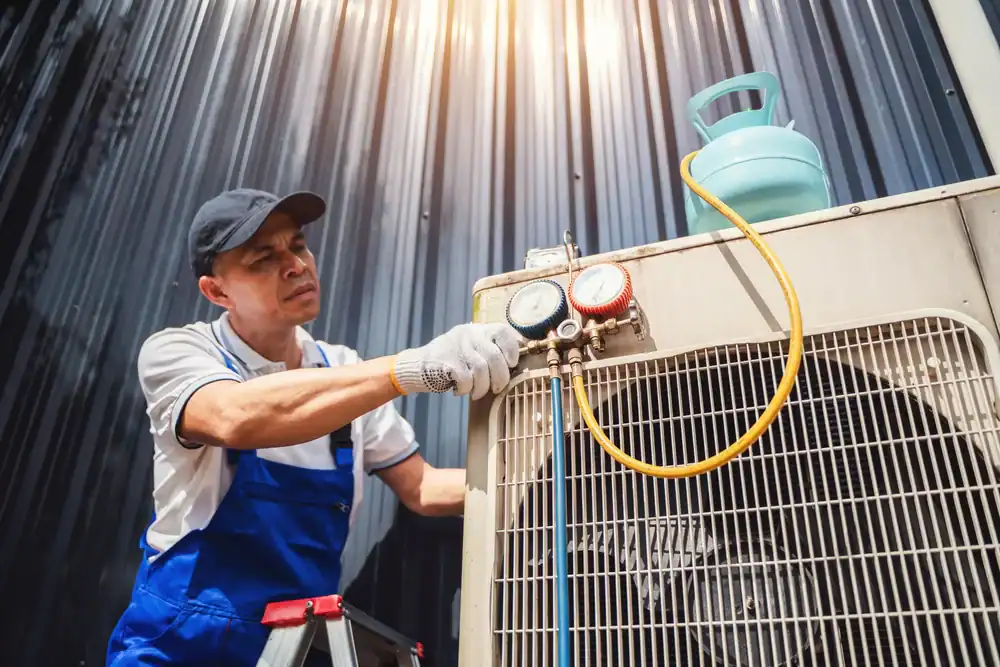
Low refrigerant is another possibility, and this one does require a professional. If the system is low on refrigerant, it’s because there’s a leak somewhere — refrigerant doesn’t simply run out. You might notice ice forming on the outdoor unit, warm air coming from the vents in cooling mode, or a noticeable drop in performance during the hottest part of the day. This isn’t something you can top off yourself. EPA regulations require certified technicians to handle refrigerant, and adding more without fixing the leak just delays the real problem.
Finally, consider the reversing valve. Heat pumps use a reversing valve to switch between heating and cooling modes. When this component fails, the system gets stuck — it might blow cool air when you need heat, or vice versa. A stuck reversing valve is a repair job, but it’s far less catastrophic than a failed compressor, and it’s a repair worth making on a system that’s otherwise in good shape.
Why Did My Heat Pump Suddenly Stop Working Altogether?
When the system doesn’t turn on at all, start at the electrical panel. A tripped circuit breaker is one of the most frequent causes of a sudden shutdown, and it takes thirty seconds to check. Reset the breaker and see if the system comes back. If it trips again immediately, stop there — a breaker that keeps tripping is telling you something is drawing too much current, and that’s a problem for a licensed technician.
Also check whether the disconnect switch near the outdoor unit is in the “on” position. These switches get bumped during maintenance or landscaping work more often than you’d think, especially in buildings with shared mechanical access.
If power isn’t the issue, the problem may be a failed capacitor. Capacitors are relatively small components that give the compressor and fan motors the electrical boost they need to start. When a capacitor fails, the motor can’t start, and the system simply won’t run — even though everything else is intact. This is actually one of the more cost-effective repairs in HVAC, and it’s worth diagnosing before assuming the compressor is gone.
Speaking of compressors: yes, they fail. But compressor failure is often the result of something else going wrong first — low refrigerant, electrical surges, or a system that’s been running outside its normal operating conditions for too long. In older New York County buildings, where HVAC systems may have been running for 20 or 30 years without a major overhaul, compressor wear is a real concern. The question at that point isn’t just “can we fix it?” but “does fixing it make financial sense compared to replacing the unit?” That’s a conversation worth having with someone who’ll give you an honest answer rather than a reflexive upsell.
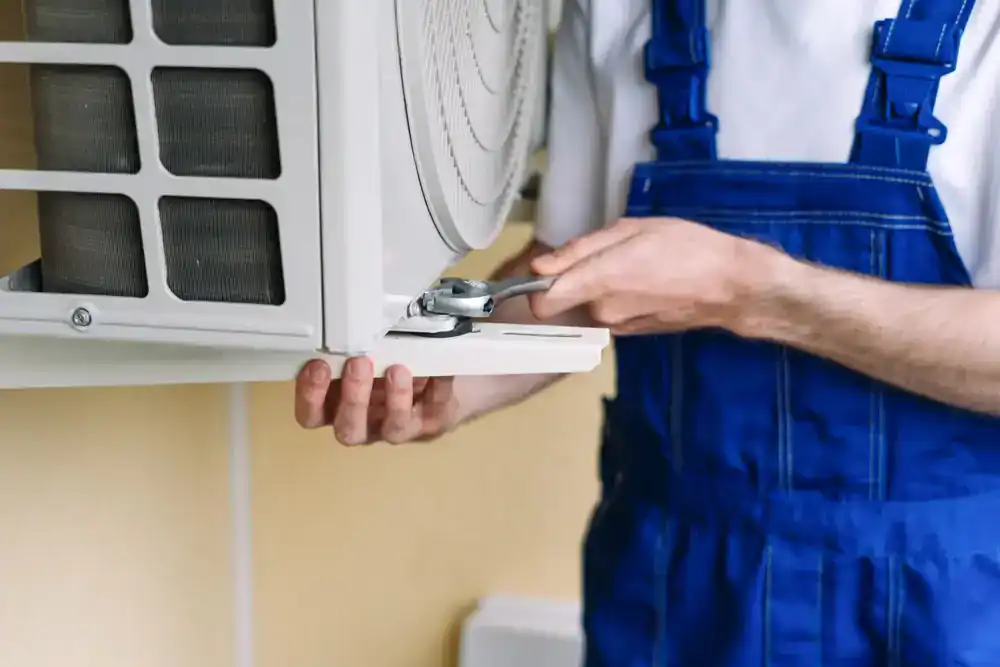
One more thing worth knowing: if your building uses PTAC units — the self-contained wall units common in Manhattan hotels, hospitals, and multi-family buildings — the failure modes are somewhat different. PTAC units are more susceptible to drainage issues, chassis seal failures, and control board problems than traditional split systems. If you’re managing a property with PTACs and one unit goes down, the cause is often specific to that unit rather than a building-wide system issue.
When to Stop Troubleshooting and Call for Heat Pump Repair in New York County
There’s a clear line between what a property manager or building super can reasonably handle and what requires a licensed HVAC technician. Checking the thermostat, swapping a filter, resetting a breaker — those are fair game. Anything involving refrigerant, electrical components beyond the breaker panel, or internal mechanical parts crosses into territory that requires certification, tools, and experience.
In New York County specifically, there’s another layer to consider. Commercial HVAC work in NYC buildings often involves DOB permit requirements, Local Law 97 compliance implications, and building management protocols that out-of-market contractors simply aren’t familiar with. Getting the repair done right the first time matters more here than in most places. We understand these requirements because we work with them every day across New York County.
How Do You Know If a Heat Pump Needs Repair or Full Replacement?
This is the question building owners and property managers dread, because the answer has real budget implications. The honest version: it depends on the age of the system, the nature of the failure, and what refrigerant it uses.
As a general rule, if a heat pump is under 10 to 12 years old and the repair cost is less than half the cost of replacement, repair is almost always the right call. If the system is pushing 15 to 20 years, has needed multiple repairs in recent years, and the current failure is significant, replacement starts to make more financial sense — especially when you factor in the efficiency gains from a modern system.
The refrigerant question is particularly relevant in New York County. Manhattan’s older building stock means a disproportionate number of systems still running on R-22, the refrigerant that was phased out under the EPA’s Clean Air Act ban effective January 1, 2020. R-22 production and import are no longer legal, which means the only supply available is reclaimed refrigerant — and it’s expensive. If your system uses R-22 and it has a refrigerant leak, you’re looking at a costly repair that buys you time on a system that will eventually need to be replaced anyway. That’s a conversation worth having now, not after the next failure.
For buildings subject to Local Law 97 — properties over 25,000 square feet facing carbon emissions caps — an aging, inefficient heat pump system isn’t just a comfort issue. It’s a compliance issue. A system running at reduced efficiency due to a refrigerant leak, dirty coils, or a failing compressor consumes more energy than it should, which can push a building closer to its emissions limit. The fines for non-compliance run $268 per metric ton of CO2 over the cap. That’s a number that tends to focus attention on HVAC system health in a way that comfort complaints alone sometimes don’t.
What Does Regular Heat Pump Maintenance Actually Prevent?
Most of the failures described above are preventable. Not all of them — components wear out, refrigerant lines develop leaks, capacitors age. But a significant percentage of emergency HVAC calls in New York County buildings trace back to deferred maintenance: filters that haven’t been changed in six months, coils that haven’t been cleaned in years, systems that haven’t had a professional inspection since they were installed.
Annual tune-ups catch the problems that are developing before they become failures. A technician checking refrigerant levels, inspecting electrical connections, cleaning the evaporator and condenser coils, and testing the capacitors and contactors can identify a component that’s about to fail and replace it on a scheduled visit — not an emergency call at 9 PM in August.
For buildings with PTAC units, this is especially true. PTACs have a typical lifespan of seven to ten years, and they age faster in dense urban environments where they’re running nearly year-round. New York County’s heat island effect — the city runs five to seven degrees warmer than surrounding areas in summer due to the concentration of concrete, glass, and human activity — means HVAC systems here work harder and longer than their counterparts in the suburbs. A hotel on the West Side or a residential tower in Midtown is asking more of its PTAC units than a comparable building in a cooler climate.
Proactive maintenance also matters for parts availability. Older systems in older buildings sometimes require components that aren’t on every supplier’s shelf. When a system is being maintained regularly, there’s time to source the right part. When it fails suddenly in the middle of a heat wave, you’re at the mercy of whoever has it in stock — and if no one does, you’re waiting. We carry over 20,000 parts and have a dedicated team focused specifically on tracking down hard-to-find and discontinued components. But even we’d rather help you avoid the emergency than respond to it.
Getting Your Heat Pump Fixed Right in New York County, NY
A heat pump that’s stopped working usually has a fixable cause. The challenge is knowing which cause you’re dealing with — and whether it’s something you can address yourself or something that needs a certified technician with the right parts and the right experience for the system you have.
If you’ve worked through the basics and the system still isn’t right, or if you’re managing a building with commercial HVAC equipment that needs a professional eye, don’t let it sit. Small problems in HVAC systems rarely stay small.
We’ve been working on heat pumps and commercial HVAC systems across New York County for over 50 years. Whether you need a diagnosis, a hard-to-find part, or someone who actually knows the difference between a PTAC failure and a building-loop issue, reach out to us directly. We’ll give you a straight answer.