
Summary:
Your AC stopped working. Maybe it’s a hotel room that guests are already complaining about. Maybe it’s a pre-war apartment building in the middle of July, and your tenants aren’t happy. Whatever the situation, the pressure to find someone fast is real — and that urgency is exactly what the wrong contractor is counting on.
Choosing an air conditioning repair company in New York County isn’t just about who can come out today. It’s about who actually knows what they’re doing, uses the right parts, and won’t hand you a surprise invoice at the end. Here’s what you should actually be looking for.
What to Look for in an Air Conditioner Repair Shop
The first thing worth understanding is that not every company calling itself an HVAC contractor has the same capabilities. In New York County specifically, licensing isn’t handled at the state level — there’s no single statewide HVAC contractor license. Instead, contractors must register with the NYC Department of Buildings and meet borough-specific requirements. That’s a detail a lot of out-of-area or newly formed companies get wrong, and it’s one that can create real legal exposure for building owners who hire them.
Beyond licensing, you’re looking for a company with actual depth — technicians who know your specific system type, a real parts inventory so repairs don’t stall mid-job, and a track record that goes beyond a few online reviews. In a market like New York County, where building stock ranges from pre-war walk-ups to modern commercial towers, that combination is harder to find than it sounds.
AC Repair Shop Credentials That Actually Matter in New York County
When you’re evaluating any ac repair shop, start with the credentials you can verify. In New York County, that means confirming the contractor is registered with the NYC Department of Buildings. You can check this directly through the DOB’s online portal — any legitimate company should have no hesitation giving you their registration number.
Federal law also requires that any technician who handles refrigerants must hold EPA Section 608 certification. This isn’t optional, and it isn’t a formality. It’s a legal requirement under the Clean Air Act. If a technician is working on your system and doesn’t hold this certification, you could be looking at liability issues on top of a botched repair. Ask directly. A credible company will tell you without blinking.
Then there’s NATE certification — North American Technician Excellence. It’s voluntary, but it’s the most widely respected credential in the HVAC industry. NATE-certified technicians go through rigorous testing specific to different system types, and statistically, they earn significantly more than uncertified counterparts, which reflects the skill gap. It’s not a requirement, but it’s a strong signal that the person working on your system actually knows what they’re doing.
One thing that trips up a lot of building managers and property owners in New York County: assuming that because a company is licensed, they’re qualified for your specific system. A contractor licensed for general residential work may have no real experience with commercial PTAC units, water source heat pumps, or fan coil systems — which are the dominant equipment types across Manhattan’s hotels, hospitals, and multi-family buildings. Always ask whether they’ve worked on your exact system type before, and how recently.
We’ve spent over 50 years working on both new systems and legacy equipment across New York County, and the questions we get most often from building managers are the ones that should have been asked before the last contractor showed up. Credentials matter — but so does knowing what questions to ask.
Red Flags That Tell You to Walk Away Before Work Starts
Some warning signs are obvious in hindsight but easy to miss when you’re dealing with a broken system in the middle of summer. The most common one is a quote that seems unusually low. It’s tempting to take it, but a price that’s significantly below what other companies are offering usually means something — cheaper aftermarket parts, unlicensed labor, or a number that’s about to change once the technician is already on-site.
Speaking of on-site: be cautious of any contractor who arrives, runs a quick look at the system, and immediately presents a long list of things that need to be replaced. A thorough diagnostic takes time. If someone is handing you a repair estimate within five minutes of showing up, they’re either guessing or selling. Either way, that’s not someone you want working on a commercial system with real downtime costs attached to it.
Another one to watch for — and this is surprisingly common — is a technician who replaces a part and then tells you to “give it a few days to start working properly.” That’s not how HVAC repairs work. When a part is replaced correctly, the system functions. If it doesn’t, the diagnosis was wrong, the part was wrong, or the installation was done incorrectly. Don’t let that explanation become the reason you call a second company three days later.
Documentation is also non-negotiable. Any reputable contractor should provide a written estimate before touching anything, itemize every charge clearly, and document all refrigerant handling. With the EPA having lowered the threshold for mandatory leak inspection documentation from 50 pounds down to 15 pounds of refrigerant, more systems now require proper records than ever before. If a contractor isn’t keeping those records, that’s a compliance issue that lands on the building owner, not the technician.
Finally, verify the physical presence. A company with a real address, a local phone number, and a history in the market is accountable in a way that an anonymous online service simply isn’t. In New York County, where commercial HVAC failures carry real financial consequences, accountability isn’t a nice-to-have.
Why Parts Inventory Separates Good AC Repair Services from the Rest
Here’s something that doesn’t get enough attention when people are comparing ac repair services: parts availability. The best diagnosis in the world doesn’t help you if the company has to order a component and come back in two weeks. In New York County’s commercial environment — hotels with occupied rooms, hospitals with patients, office buildings in the middle of a heat wave — that kind of delay isn’t just inconvenient. It has a dollar figure attached to it.
A company with deep on-hand inventory can often resolve the same problem in a single visit that a less-stocked competitor would stretch into multiple trips. That’s the practical difference between a company built around wholesale supply and one that’s just running service calls.
How to Find a Repair Company That Can Handle Older HVAC Systems in New York County
This is one of the most common frustrations we hear from building managers across New York County. A system goes down, they call a contractor, and the answer they get is: “We can’t find the part” or “That unit is too old — you need to replace the whole thing.” Sometimes that’s true. Often, it isn’t.
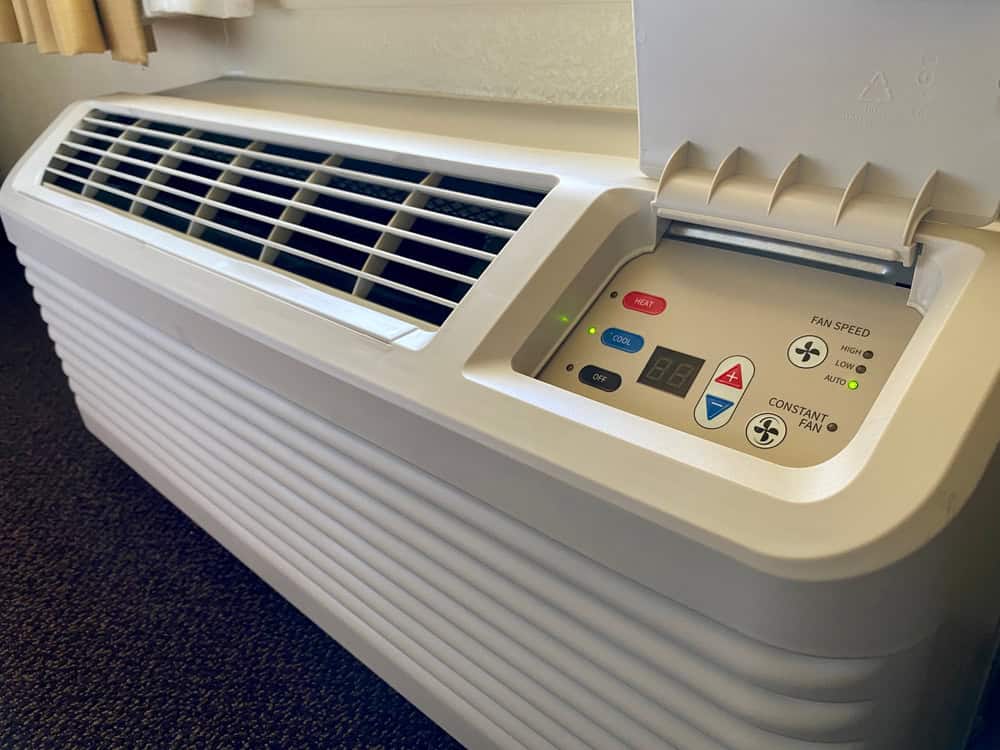
New York County’s building stock is unlike almost anywhere else in the country. Pre-war buildings, mid-century high-rises, and legacy commercial systems that have been running for decades are the norm here, not the exception. Many of these buildings rely on PTAC units, through-the-wall systems, or older central configurations that general HVAC contractors simply don’t encounter often enough to know well. When those systems break down, the repair requires both the technical knowledge to diagnose them correctly and the inventory depth to actually source the right parts.
We carry over 20,000 parts — OEM and hard-to-find components included — which is why our Smart Parts Team operates on the premise that if we can’t get it, nobody can. That’s not a marketing line. It’s a reflection of 50-plus years of building supplier relationships and stocking for the systems that actually exist in New York County’s buildings, not just the ones that were installed last year.
The OEM distinction matters more than most people realize. Original Equipment Manufacturer parts are built to the exact specifications of your system. Aftermarket alternatives can work, but they can also introduce compatibility issues, void manufacturer warranties, or simply fail faster. A company that defaults to aftermarket parts without disclosing it isn’t necessarily doing something wrong — but you should know what you’re getting. Ask before the work starts.
For commercial clients in particular — property management companies, hotel operators, healthcare facilities — the ability to source the right part quickly and correctly isn’t just a convenience. It’s the difference between a one-day fix and a multi-day disruption that affects tenants, guests, or patients. That’s a risk worth taking seriously when you’re choosing who to call.
Questions to Ask Any AC Repair Company Before You Hire Them
Most people don’t know what to ask, and contractors know it. Walking into that conversation with a few direct questions changes the dynamic entirely and tells you a lot about who you’re dealing with before they’ve touched anything.
Start with licensing. Ask for their NYC Department of Buildings registration number and confirm that their technicians hold EPA Section 608 certification. If they push back or get vague, that’s your answer. A company that’s fully compliant will give you that information without hesitation, because they have nothing to hide.
Ask specifically about experience with your system type. If you’re managing a Midtown hotel with 200 PTAC units, you want to know that the company has actually worked on PTACs at scale — not that they’ve “handled all kinds of systems.” If you’re in an older building in the Upper West Side or East Harlem with a legacy central system, you want to ask directly whether they’ve worked on equipment of that age and configuration. The answer will tell you more than any review.
Ask about parts. Where do they source them? Do they carry OEM components, or do they default to aftermarket? Do they have the part on hand, or will they need to order it? In New York County, where same-day resolution is often the expectation rather than the exception, a company that has to wait on shipping for common components is going to cost you time you don’t have.
Get the estimate in writing, every time. A verbal quote has no legal standing. The written estimate should break down labor, parts, and any diagnostic fees separately — and it should match what ends up on the final invoice. If a company is reluctant to put numbers in writing before work begins, that’s a red flag worth taking seriously.
Finally, ask about warranty coverage. Not just on parts — on labor. A company that stands behind its work will warranty both. One that only covers parts is leaving you exposed if the same problem comes back because the installation was done incorrectly.
These aren’t difficult questions. But they’re the ones that separate a confident, credible contractor from one who’s hoping you won’t ask.
Choosing the Right Air Conditioning Repair Company in New York County
The short version: verify credentials, ask about parts, get everything in writing, and pay attention to how a company handles your questions before any work starts. In New York County — where buildings are old, systems are varied, and downtime carries real costs — those details matter more than they would almost anywhere else.
The right company has the licensing to operate legally, the inventory to fix your system without a two-week wait, and the experience to actually understand what they’re looking at. That combination is less common than it should be.
If you’re managing a commercial property, a hotel, a school, or a multi-family building in New York County and need a company that checks every one of those boxes, we’ve been doing exactly this work for over 50 years. Give us a call — we’re easy to reach, we’ll give you straight answers, and we’ll tell you honestly what your system needs.