Summary:
Your system goes down on a Saturday night in August. The building is heating up, your tenants are calling, and you need someone there fast. The problem isn’t just the repair — it’s not knowing what it’s going to cost until the invoice arrives.
Emergency HVAC repair pricing in New York County is genuinely hard to pin down, and that uncertainty is exactly what makes these situations so stressful. This page explains what drives the cost, what after-hours service actually includes, and what separates a fair emergency bill from one you should push back on.
What Factors Affect Emergency HVAC Repair Cost?
Emergency HVAC repair costs more than a standard service call — that part is straightforward. What’s less clear is how much more, and why. In New York County, most emergency repairs fall somewhere between $250 and $900 for common issues, but that range can stretch well past $1,500 depending on what’s wrong, when you call, and whether the technician has the right parts on the truck.
Labor is usually the biggest line item, often making up 40 to 90 percent of the total bill. After-hours and weekend rates typically run 50 to 100 percent higher than standard daytime rates in New York County. Add in a diagnostic fee — usually $150 to $300 for emergency visits — and the bill starts climbing before a single part is touched.
Then there’s the parts question. If a technician has to order a component and come back for a second visit, you’re paying two service call fees plus shipping costs. That alone can add hundreds of dollars to a repair that should have been straightforward.
Why After-Hours HVAC Rates Are Higher in New York County
After-hours pricing isn’t arbitrary — there are real cost drivers behind it. Technicians working nights, weekends, and holidays are typically paid overtime. Dispatch operations that run 24/7 carry overhead that daytime-only companies don’t. And in New York County, where parking restrictions, freight elevator scheduling, and building management approvals can add an hour to any service call before the work even starts, the logistics cost is real.
That said, the premium varies widely. Some contractors charge a flat after-hours surcharge of $40 to $80 per hour above their standard rate. Others effectively double their pricing after 5 p.m. The problem is that most companies don’t disclose which model they use until you’re already committed — or until the invoice shows up.
What you should expect from any reputable 24 hour AC service provider is a clear answer when you call to schedule: what is the after-hours rate, is the diagnostic fee credited toward the repair, and what’s the estimated total range before anyone shows up? If a company can’t or won’t answer those questions upfront, that tells you something important.
In Manhattan specifically, building access complexity is a real cost factor that out-of-area contractors often underestimate. A technician unfamiliar with a pre-war building’s mechanical room, or who hasn’t navigated a Midtown freight elevator before, will take longer — and you’ll pay for that time. Experience with New York County’s specific building stock matters more than most people realize when the meter is running.
One more thing worth knowing: New York County requires permits for HVAC work that involves modifying electrical or gas lines, structural components, or ductwork. Those permits start at $130 and can only be pulled by a licensed contractor. If a company quotes you a price without mentioning permits on work that requires them, ask directly — that cost has to come from somewhere, and it usually ends up on your bill.
How Parts Availability Changes the Total Cost of an Emergency Repair
Here’s a scenario that plays out constantly in New York County: a technician arrives, correctly diagnoses the problem, and then tells you the part needs to be ordered. You’ve paid a service call fee, your system is still down, and now you’re waiting two to five days for a component to ship — plus scheduling a second visit, which means a second labor charge.
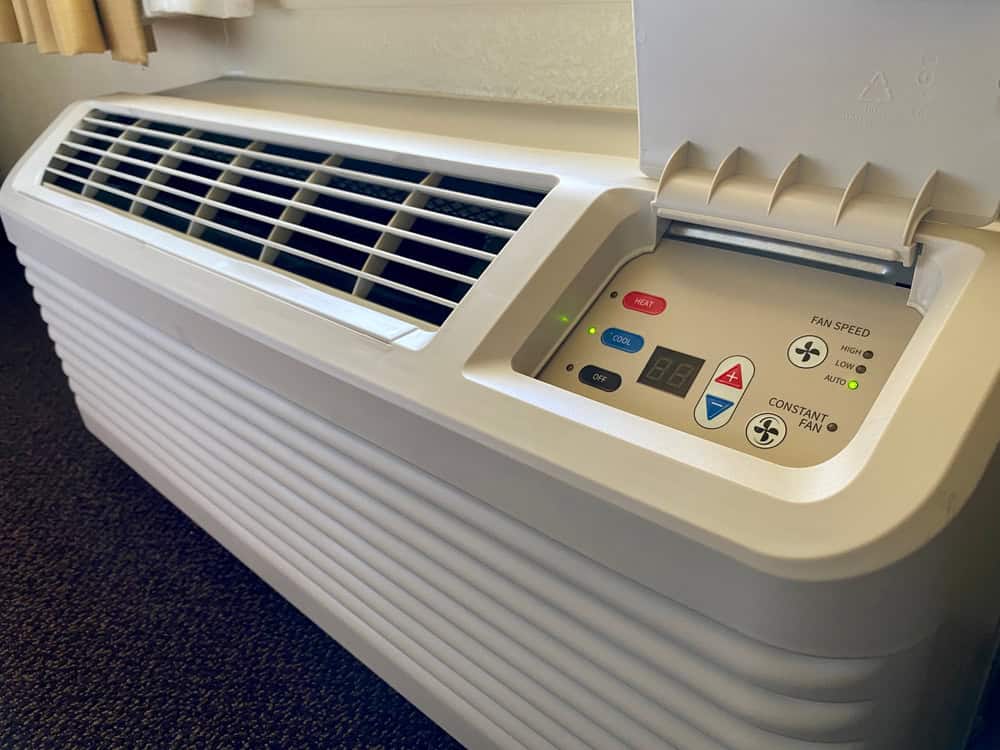
For buildings with older PTAC units, legacy fan coil systems, or any equipment that’s more than ten years old, this isn’t an edge case. It’s the norm with companies that don’t stock deep inventory. And in a borough where a significant portion of the residential and commercial building stock was built between the 1950s and 1980s, parts availability is a real operational variable — not a footnote.
The practical difference between a contractor with 20,000 parts on the shelf and one who orders as needed can be the difference between a same-day repair and a multi-day outage. For a hotel in Midtown, a nursing facility on the Upper East Side, or a residential high-rise where the building super is fielding complaints from every floor, that timeline matters enormously.
It’s also worth understanding the OEM versus aftermarket parts distinction. Original equipment manufacturer parts come directly from the brand that built your system. Aftermarket parts are third-party alternatives that may fit but aren’t held to the same specifications. In an emergency, some contractors will install whatever’s available — and if that part fails early or voids your equipment warranty, the cost of the original “savings” compounds quickly. Asking whether parts are OEM before authorizing a repair is a reasonable question, and any contractor worth working with will answer it directly.
Emergency Air Conditioning Service in New York County: What to Expect
Manhattan summers are unforgiving. The urban heat island effect means temperatures in New York County can run 7 to 10 degrees higher than surrounding areas, and when a heat wave hits, AC failures stop being inconvenient and start being dangerous — especially in buildings housing elderly residents or medical facilities.
Emergency air conditioning service in New York County during peak summer months means competing with every other building in the area for available technician time. Response windows that might be two hours in a normal week can stretch to four to eight hours during extreme weather events. Knowing this in advance helps you set expectations and make the right call about urgency.
24 Hour AC Service in New York County: What's Actually Included?
“24/7 availability” means different things depending on who you’re calling. For some companies, it means an answering service takes your information and someone calls you back in the morning. For others, it means a certified technician is actually dispatched within the hour. Before you commit to a provider during an emergency, it’s worth asking one direct question: what is your actual response time right now, tonight?
A legitimate 24 hour AC service operation will give you a real answer — a time window, not a vague promise. They’ll also tell you the after-hours rate before they dispatch, not after the work is done. If the person on the phone can’t tell you either of those things, that’s a signal.
What a proper emergency AC service call should include: a diagnostic assessment of the system, a clear explanation of what failed and why, an itemized estimate before any repair work begins, and confirmation of whether the diagnostic fee applies toward the total cost. We also provide a written report of findings — useful documentation for building owners managing multiple units or dealing with warranty claims.
For commercial properties in New York County — hotels, high-rises, hospitals, schools — there’s an added layer of urgency that residential calls don’t always carry. A single PTAC failure in a hotel room is a guest complaint. Forty of them during a July heat wave is an operational crisis. The ability to source brand-specific PTAC parts quickly, particularly for common New York County systems like Ice Air units, is what separates a company that can actually solve the problem from one that shows up, shrugs, and orders a part.
We’ve been the official aftermarket distributor for Ice Air in the New York metro area for years, which means when a building super in Midtown calls us about a failed Ice Air PTAC, we’re not guessing at lead times. We have the parts on hand. That’s not a small thing when the alternative is days without climate control.
Emergency Heating Repair in New York County: The Legal Side Most Tenants Know and Landlords Can't Ignore
Heating emergencies in New York County carry weight that goes beyond discomfort. Under the NYC Housing Maintenance Code, building owners are legally required to maintain indoor temperatures of at least 68°F during the day and 62°F overnight from October 1 through May 31. When heat goes out, tenants have the right to file a 311 complaint. HPD violations follow. Fines accumulate. And the repair still has to happen — just now with a paper trail attached.
This is the reality of emergency heating repair in New York County. It’s not a matter of waiting until Monday to see if the system comes back on. It’s a legal obligation with a clock running from the moment the failure is reported.
The cost of emergency heating repair varies by what failed. A faulty thermostat might run $100 to $300. A blower motor or capacitor issue typically falls in the $250 to $600 range. Compressor or heat exchanger failures can push past $1,500 to $3,500, and at that point the repair-versus-replace conversation becomes relevant. The industry standard guidance — sometimes called the 50% rule — is that if a repair costs more than half the price of a new unit, replacement is usually the smarter long-term investment. But that’s a conversation that deserves honest input from someone who isn’t financially motivated to push you toward the more expensive option.
For building owners managing older stock in New York County — pre-war buildings with steam heat, mid-century high-rises with aging boiler systems — the heating season brings predictable stress. The systems that sat dormant all summer are the ones most likely to fail on the first cold night in October. Getting ahead of that with a pre-season inspection isn’t just good practice; it’s the difference between a $200 maintenance visit and a $2,000 emergency call at 11 p.m. in January.
We work with building supers, property managers, and facilities teams across New York County who have learned that lesson the hard way. The ones who call us in September tend to have much quieter winters than the ones who call us when the heat’s already out.
How to Get a Fair Emergency HVAC Repair Cost in New York County
The short version: ask the right questions before anyone shows up. What’s the after-hours rate? Is the diagnostic fee credited toward the repair? Do you have the parts on hand for my system type? Can you give me a written estimate before work begins? A company that answers those questions clearly and without hesitation is one worth trusting with an emergency call.
Emergency HVAC repair in New York County is expensive relative to national averages — that’s the reality of this market. But expensive and unfair aren’t the same thing. Knowing what drives the cost, what’s negotiable, and what red flags look like puts you in a much better position when you’re making a fast decision under pressure.
We’ve been doing this work in the New York area since 1964. If you’re dealing with an emergency or just want to understand your options before one happens, we’re available to talk it through — no pressure, no guesswork.