Summary:
If you manage a hotel, apartment building, or commercial property in New York County, you already know the pressure that comes with a broken PTAC unit. The guest in room 412 is calling the front desk. The super is tied up on another floor. And the HVAC company you just called can’t get someone out until Thursday.
That gap — between when something breaks and when it actually gets fixed — is exactly what this guide is designed to help you close. We’ll walk through what goes wrong with PTAC units, how to think about repair versus replacement, and what to look for in a service provider that can actually solve the problem instead of just showing up.
Common PTAC Unit Repair Problems and What's Actually Causing Them
Most PTAC failures aren’t mysterious. The same handful of issues come up again and again — and once you know what to look for, you can usually tell whether you’re dealing with a quick fix or something more involved.
Water leaking from the unit is one of the most frequent complaints. It usually points to a clogged drain line, a unit that’s slightly out of level, or a drain pan that hasn’t been cleaned in too long. In New York County, where summer humidity is consistently high and building air quality varies widely, drainage problems show up more often than they do in drier climates. The fix is often straightforward, but ignoring it leads to water damage, mold risk, and a much bigger repair bill down the road.
The other common issues — a unit that’s running but not cooling, a unit that short-cycles on and off, unusual noise, or a unit that simply won’t turn on — each point to different components: capacitors, fan motors, control boards, refrigerant levels, or electrical connections. A technician who diagnoses the symptom without checking the underlying cause will often leave you with the same problem two weeks later.
Why New York County Buildings See Specific PTAC Failure Patterns
New York County isn’t a typical HVAC market, and the failure patterns here reflect that. The region’s hard water supply accelerates mineral buildup inside PTAC units, clogging coils and reducing efficiency faster than you’d see in other cities. High-rise building vibrations — especially in older construction — put stress on internal components over time. And the sheer density of urban particulates means filters clog faster here than almost anywhere else. Monthly filter maintenance isn’t optional in this environment; it’s what keeps a unit running through a full season.
There’s also the building access factor. Getting a technician in and out of a New York County property — through the service entrance, past the building manager, up to the right floor — takes coordination that suburban HVAC companies aren’t used to. A provider who works in this city regularly understands how to move efficiently through that process. One who doesn’t will cost you time you don’t have.
Then there’s the age of the building stock itself. A significant portion of New York County’s residential and hospitality properties were built between the 1950s and 1980s, and many of them still use the original PTAC sleeve infrastructure from that era. The units installed in those sleeves have turned over multiple times, but the surrounding infrastructure shapes what fits and what doesn’t. Knowing the difference between a modern replacement that’s compatible with a 40-year-old sleeve and one that isn’t requires the kind of institutional knowledge that only comes from decades of working in this specific market — not just HVAC experience in general.
We’ve been supplying and servicing PTAC units in New York County and across the metro area since 1964. That’s not a marketing line — it’s context for why we recognize these failure patterns immediately and know how to address them without guesswork.
Can You Repair a Central Air Unit the Same Way You Repair a PTAC?
It’s a fair question, especially for property managers who oversee buildings with mixed HVAC systems. Central air unit repair and PTAC unit repair share some fundamentals — refrigerant handling, electrical diagnostics, coil cleaning — but the two systems are built differently and fail differently.
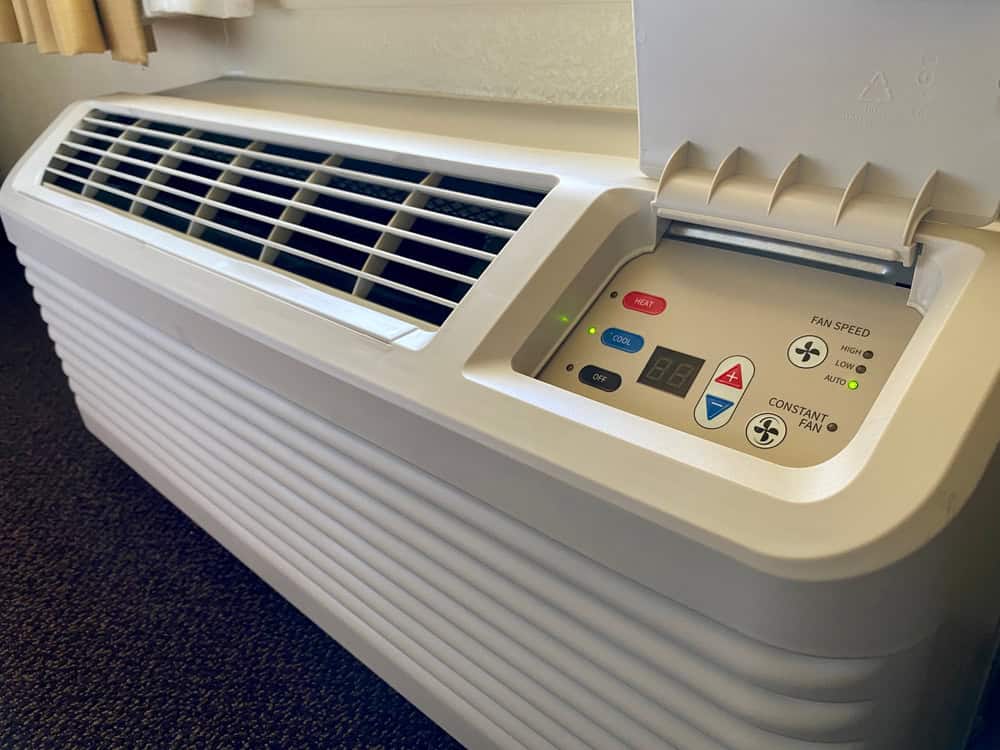
A central air system distributes conditioned air through ductwork from a central unit. When it fails, the impact is building-wide or zone-wide. A PTAC unit is self-contained, mounted through the wall, and controls a single room. When it fails, the impact is immediate and localized — one guest room, one office, one apartment. That localization is actually an advantage in some ways: you can isolate the problem, address it without disrupting the rest of the building, and get that specific room back online quickly.
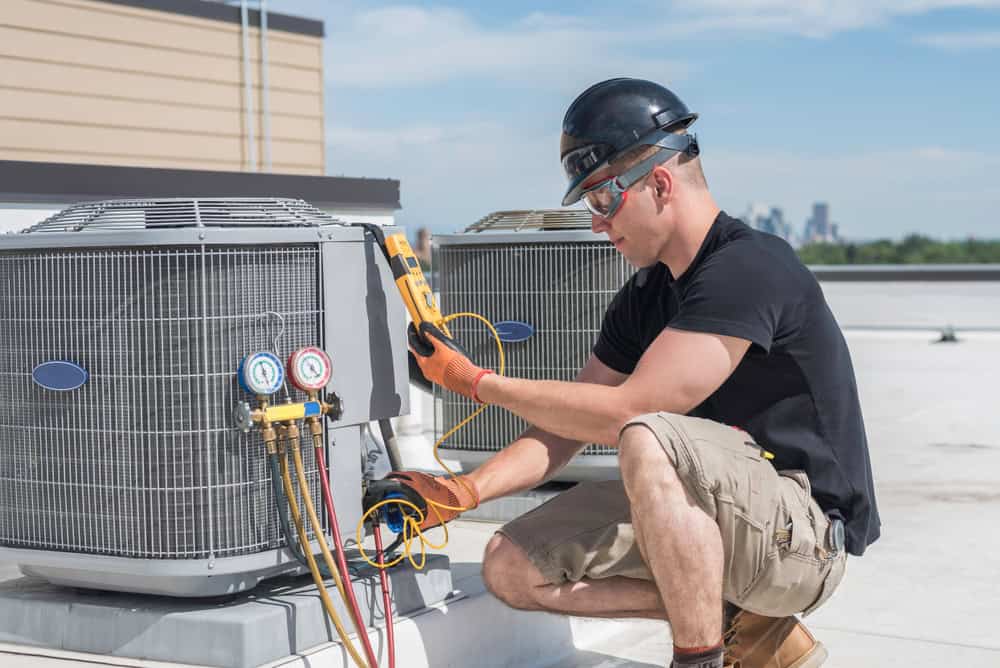
The repair process also differs. Central air systems require access to the main unit, which is typically in a mechanical room or on the roof. PTAC repairs happen at the unit itself — inside the room, at the wall. That means less building disruption but also different diagnostic requirements. A technician needs to be familiar with the specific brand and generation of PTAC installed, because control boards, fan assemblies, and refrigerant configurations vary significantly across manufacturers and model years.
This is where parts availability becomes the deciding factor. A technician who shows up without the right part — or who has to order it and come back — doubles your downtime. We stock over 20,000 HVAC and PTAC components, including OEM parts and hard-to-find components for older and discontinued models. When our technician arrives, the goal is to complete the repair in one visit, not schedule a follow-up.
PTAC Unit Repair vs. Replacement: How to Make the Right Call
This is the question that comes up on almost every service call, and it’s the one where bad advice costs property managers the most money. Some providers default to replacement because it’s a larger ticket. Others patch aging units that are going to fail again in three months. Neither approach serves you well.
The honest framework is simple: if the cost of repair is likely to exceed 50% of what a new unit would cost, replacement is worth serious consideration. A new PTAC unit typically runs between $800 and $1,200 depending on BTU capacity and features, which puts the repair threshold at roughly $400 to $600. Below that number, repair almost always makes sense. Above it — especially on a unit that’s already 8 to 10 years old — the math starts to shift.
When Repairing an Older PTAC Unit Still Makes Sense
Age alone isn’t a reason to replace a PTAC unit. A well-maintained unit can last 12 years or more. If you’ve kept up with filter cleaning, had the coils serviced annually, and addressed small issues before they compounded, a unit at year eight or nine may still have several good years left in it. The key question isn’t how old it is — it’s what condition it’s actually in.
Single-component failures on an otherwise healthy unit are almost always worth repairing. A failed capacitor, a worn fan motor, a clogged drain — these are routine repairs with reasonable costs. The unit isn’t dying; one part gave out. Fix the part, check the rest of the system while you’re in there, and move on.
Where the calculus changes is when you’re stacking repairs. If a unit needed a new control board six months ago and now the compressor is struggling, you’re not dealing with isolated failures — you’re dealing with a unit that’s wearing out across multiple systems simultaneously. At that point, the repair cost conversation becomes a replacement cost conversation, and the energy efficiency argument starts to matter too. Newer high-efficiency PTAC models consume significantly less electricity than aging units. Over a full year, across multiple units in a New York County property, that gap adds up to real savings.
For hotel operators and property managers overseeing large PTAC fleets, the repair-versus-replace decision is also a budget planning question. Units don’t fail all at once — they trickle in, one per month, each invoice feeling manageable on its own. But if you add them up across the year and compare that number to what proactive replacement of your oldest units would have cost, the picture often looks different. We offer one-on-one consultations specifically to help property managers work through this analysis without any pressure toward a particular outcome.
Finding PTAC Parts for Discontinued or Hard-to-Source Models
This is where most HVAC companies hit a wall — and where we don’t. New York County’s building stock includes PTAC units from brands and model lines that haven’t been in active production for years. McQuay, older Islandaire configurations, discontinued GE chassis, legacy Amana models — these units are still running in buildings across the county, and when they need a specific component, most suppliers simply can’t get it.
We’ve built our parts operation specifically around this problem. Our inventory covers over 20,000 HVAC and PTAC components, with a dedicated focus on OEM parts and hard-to-find equipment. Our Smart Parts Team exists for exactly the situations where a standard supplier would tell you the part is unavailable. If they can’t source it, it genuinely can’t be found — that’s not a tagline, it’s the result of six decades of supplier relationships and institutional knowledge about what’s out there.
This matters practically in a few ways. First, it means we can often repair units that other companies would immediately write off as unrepairable, saving you the cost and coordination of a full replacement when the unit itself still has life in it. Second, it means our technicians arrive prepared — when we diagnose a failed component, we have a much higher likelihood of having the right part available or being able to get it same day or next day, rather than scheduling a return visit a week later. In a hotel environment where every room-night matters, that turnaround difference is real money.
We’re also the designated New York metro aftermarket distributor for Ice Air — one of the most commonly installed PTAC brands in New York County hotels and apartment buildings. Ice Air’s own website directs New York metro area customers to us for aftermarket parts and service. That’s a manufacturer endorsement, not a self-claim, and it means that if your building runs Ice Air units, you’re already in the right place.
Who to Call for PTAC Unit Repair in New York County, NY
PTAC repair in New York County isn’t the same as PTAC repair anywhere else. The buildings are older, the access is tighter, the regulatory environment is stricter, and the operational stakes — especially in hospitality — are higher. You need a provider who already understands all of that, not one who’s figuring it out on your property.
For over 60 years, we’ve been the HVAC resource that hotels, property managers, building engineers, and facilities teams in New York County have relied on — not because of a marketing campaign, but because of what happens when you actually call us. You get someone who knows the equipment, knows the city, and gives you a straight answer about what needs to happen and what it’s going to cost.
If you’re dealing with a PTAC unit that’s not performing, or you want an honest assessment of whether repair or replacement makes more sense for your building, reach out to us. We’ll give you the information you need to make the right call — without the runaround.