Summary:
Your AC isn’t cooling. Or it’s making a noise it wasn’t making last week. Or it just stopped — right when the temperature hit 95°F and the humidity made it feel like 105.
In New York County, that’s not a minor inconvenience. It’s a crisis. And the last thing you need is a contractor who shows up unprepared, can’t find the part, and tells you they’ll be back in three days.
We’ve been doing AC repair in New York County since 1964. We know the buildings here, the systems that run them, and the specific challenges that come with Manhattan’s density, aging infrastructure, and non-stop commercial demands. This page covers what you need to know — from common problems to real costs to when repair actually makes more sense than replacement.
Common Problems With AC Units in Manhattan Buildings
New York County’s building stock is unlike anything you’ll find in the suburbs. You’ve got pre-war structures with non-standard sleeve configurations, high-rises with rooftop units exposed to years of urban pollution, and hotels running PTAC systems through walls that were never designed for modern cooling loads. The problems that show up here aren’t always textbook.
That said, the most common AC issues follow a recognizable pattern: refrigerant leaks, failing capacitors, dirty or clogged coils, compressor problems, and drainage blockages. Some of these are quick fixes. Others signal a deeper issue that’s worth diagnosing properly before you spend money on a band-aid.
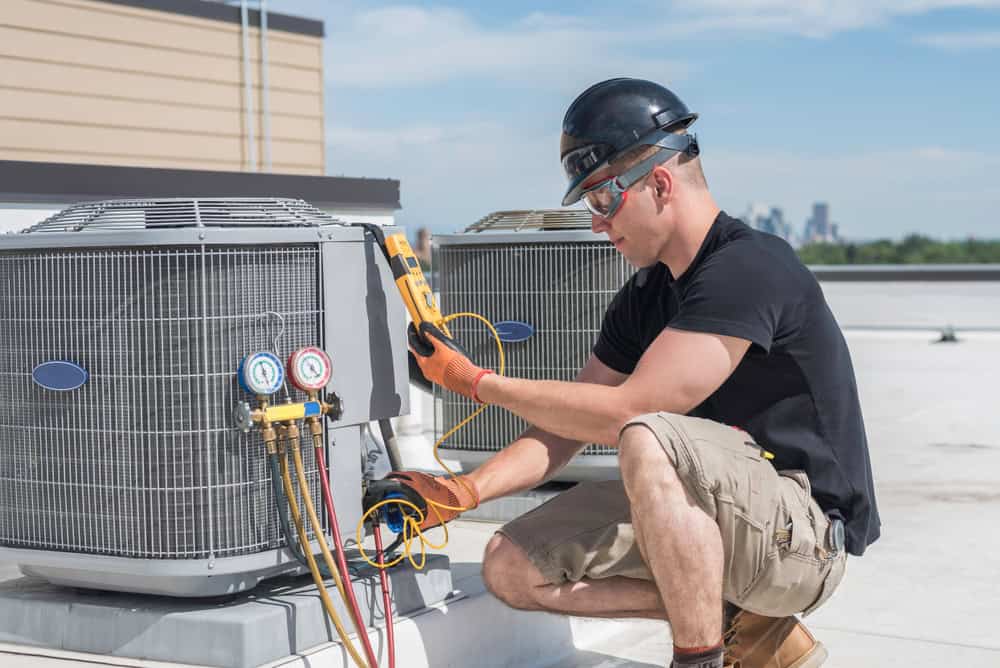
The key is accurate diagnosis the first time. A technician who misreads the symptom — replacing a capacitor when the real issue is a refrigerant leak, for example — costs you time and money. That’s why we show up with a fully stocked vehicle and run a thorough assessment before recommending anything.
AC Repair Shop With 20,000+ Parts Stocked and Ready
One of the most frustrating things that can happen during a repair call is hearing “we need to order that part.” In New York County, where time is money and a broken AC can mean guest complaints, regulatory exposure, or a building full of uncomfortable tenants, waiting days for a part to arrive isn’t acceptable.
We stock over 20,000 HVAC parts and accessories — including OEM components and hard-to-find replacements for older systems. OEM, or Original Equipment Manufactured, parts are made to the exact specifications of your original equipment. They fit correctly, perform reliably, and don’t void manufacturer warranties the way generic aftermarket parts sometimes do. That distinction matters more than most people realize, especially for commercial systems that run continuously.
Our Smart Parts Team is specifically built around sourcing what others can’t find. New York County has a lot of aging infrastructure — systems installed decades ago, PTAC units in sleeves that don’t conform to modern standard sizing, commercial air handlers with discontinued components. We’ve been navigating that reality for over 50 years. If our Smart Parts Team can’t get it for you, then no one can.
This isn’t a claim we make lightly. It comes from decades of building supplier relationships, maintaining a deep wholesale inventory, and developing the institutional knowledge to cross-reference older systems with available replacement options. When a building manager in Midtown calls us about a unit that another contractor declared unrepairable, we don’t assume they’re right. We look at what the system actually needs and work from there.
For commercial clients — hotels, hospitals, real estate portfolios — this parts depth is a practical advantage that directly affects how quickly their systems get back online. A faster repair means less disruption. Less disruption means lower costs and fewer headaches all around.
AC Repair Services for Both Older and Modern Systems
New York County has some of the oldest occupied building stock in the country. A lot of those buildings are still running HVAC systems that were installed well before anyone reading this page started their career. Servicing those systems requires a different kind of knowledge than what you get from training on current equipment alone.
We’ve been working on HVAC systems in this region since 1964. That means we’ve seen the full range — from legacy central air configurations in pre-war co-ops to modern variable refrigerant flow systems in new Midtown construction. We understand both, and we don’t write off an older system just because it’s old.
At the same time, newer systems come with their own complexity. The EPA’s phaseout of R-22 refrigerant is complete, and current systems use A2L refrigerants that require certified handling. Building management system integrations, smart thermostats, and energy efficiency requirements under NYC’s Local Law 97 all add layers to what used to be a straightforward service call. Our technicians are trained and certified to handle current systems as well as the ones that have been running since before the internet existed.
The practical upside for you: whether your building is a 1940s prewar on the Upper West Side or a glass tower that opened last year, we can service it. We carry major brands including Carrier, Trane, Rheem, Lennox, Goodman, and Amana — which means we’re not limited to systems we installed ourselves. If it’s in your building, we can work on it.
That flexibility matters in New York County, where property managers often oversee portfolios with multiple building types, multiple system configurations, and zero tolerance for a contractor who shows up and says “we don’t work on that.”
AC Repair Cost in New York County, NY
Cost is usually the first question, and it’s a fair one. AC repair in New York County runs higher than the national average — that’s just the reality of operating in one of the most expensive labor markets in the country. Manhattan projects typically cost 10–30% more than equivalent work in the outer boroughs, and that gap reflects real factors: union labor rates, building access logistics, and the specialized expertise required for New York County’s specific system types.
For most common repairs, you’re looking at a range of roughly $454–$654, though the full range runs from around $150 for minor fixes to over $1,200 for more serious issues like compressor work or refrigerant system repairs. Emergency or after-hours calls carry an additional premium of $150–$300 — which is worth it when the alternative is a hotel floor of overheated guests or a nursing facility without climate control.
AC Unit Repair Cost: What You're Actually Paying For
When you get an invoice for AC repair, the cost breaks down into a few components: diagnostic labor, repair labor, parts, and any applicable fees for emergency or after-hours service. In New York County, labor alone runs $100–$200 per hour for qualified HVAC technicians — and that rate reflects the certification, experience, and physical demands of working in Manhattan’s building environments.
Parts costs vary widely depending on what failed. A capacitor replacement might run $150–$300 total. A refrigerant recharge — which requires EPA-certified handling and has become more expensive since the R-22 phaseout — can run $200–$600 depending on the refrigerant type and how much is needed. Compressor replacement is at the higher end, often $800–$1,500 or more, and that’s where the repair vs. replace conversation becomes important.
One thing that affects cost more than most people realize is parts availability. When a contractor has to source a part from a specialty supplier and wait for shipping, you’re paying for their time on multiple visits plus the delay itself. Our 20,000-part inventory eliminates most of that. When we can complete the repair in a single visit, you pay for one service call — not two or three.
We also believe in telling you what something costs before we do it. Transparent, itemized estimates are standard for us — not a courtesy we extend selectively. In New York County, where contractor pricing surprises are common enough to be a running joke, we’d rather earn your trust upfront than explain a bill after the fact.
For commercial clients managing large portfolios, we can also discuss service agreements and maintenance contracts that spread costs more predictably over time. Planned maintenance is almost always cheaper than emergency repair, and it’s significantly cheaper than a full system replacement triggered by deferred maintenance.
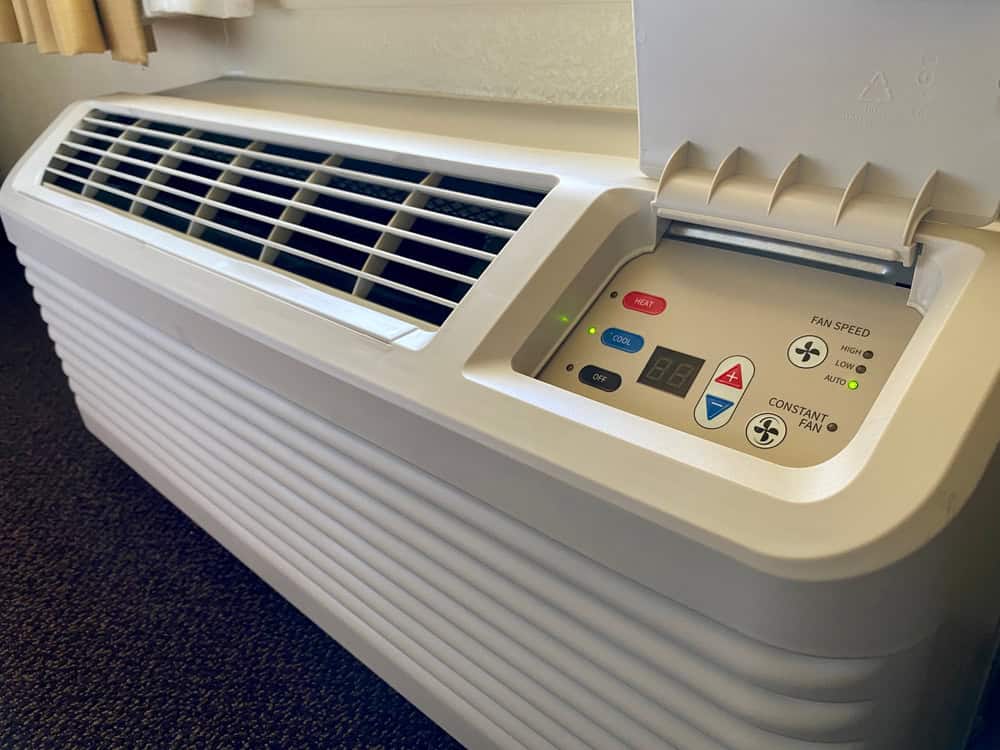
PTAC units — the through-wall heating and cooling systems you find in virtually every Manhattan hotel room, hospital patient room, and older apartment building — are the dominant system type in New York County. They’re also the system that generalist contractors most frequently mishandle.
The reason comes down to New York County’s specific building constraints. Many pre-war buildings have PTAC sleeve dimensions that don’t conform to modern standard sizing. That limits your replacement options significantly and requires a contractor who knows how to source for non-standard configurations — not just pull the most common unit off the shelf and hope it fits. We’ve seen building managers get burned by contractors who installed the wrong unit, left gaps in the sleeve, or voided the building’s existing setup because they didn’t understand what they were working with.
PTAC repair also requires familiarity with the specific failure modes of these units. Drainage pan overflow, coil icing, thermostat miscalibration, and compressor wear are all common — and each requires a different approach depending on the unit’s age, brand, and installation environment. We service all major PTAC brands and carry OEM parts for units that other contractors would declare beyond repair.
For hotel operators and property managers, PTAC reliability is a direct revenue issue. A failed unit in a guest room is a complaint, a comp, and a review. A failed unit in a hospital room is a patient safety concern. We understand the stakes, and we respond accordingly — with technicians who know these systems, parts that are actually in stock, and a process that’s built around resolving the issue on the first visit wherever possible.
PTAC maintenance is equally important and often overlooked. Regular cleaning of coils and filters, inspection of drainage components, and refrigerant checks can extend the life of a PTAC unit significantly and prevent the kind of mid-summer failures that cost far more to fix than they would have cost to prevent.
AC Repair in New York County: What to Look for and Who to Call
If there’s one thing New York County’s HVAC market has taught us over the past 60 years, it’s that the difference between a good repair and a bad one usually comes down to three things: accurate diagnosis, the right parts, and a technician who’s actually done this before in buildings like yours.
New York County is not a forgiving market for contractors who show up unprepared. The buildings are complex, the systems are varied, the regulatory environment is demanding, and the clients — whether they’re managing a hotel in the Flatiron District or a nursing facility on the Upper East Side — have zero margin for error. That’s the reality we’ve been working in since 1964, and it’s shaped how we approach every service call.
If your AC is failing, making noise, or just not performing the way it should, the best move is to get a real assessment from someone who knows what they’re looking at. We’ve been that resource for commercial clients across New York County for decades — and we’re ready to be that for you.
—
**Frequently Asked Questions**
**Do you offer 24hr AC repair in New York County?** Yes. We provide around-the-clock emergency AC repair throughout New York County. Manhattan summers don’t keep business hours, and neither do we. Whether it’s a hotel on the West Side or a residential high-rise in the Financial District, we can dispatch a uniformed technician in a fully stocked vehicle when you need it — not when it’s convenient for us. Our 24/7 availability is built specifically for New York County’s demanding commercial environment, where a failed AC system during peak hours can cost thousands in lost revenue or tenant complaints.
**What does emergency air conditioner repair actually involve?** Emergency air conditioner repair means we prioritize your call, arrive with the tools and parts needed to diagnose and fix the problem on-site, and don’t leave you waiting for a follow-up appointment to complete the work. In New York County, where building access, freight elevators, and co-op requirements can complicate a service call, we come prepared for those logistics rather than discovering them on arrival. Our technicians carry diagnostic equipment and common replacement parts on every vehicle, so most emergency calls get resolved in a single visit.
**Can I get AC repair same day service in Manhattan?** In most cases, yes. Same day HVAC repair is available for both emergency and urgent non-emergency situations throughout New York County. Availability depends on call volume — which is why calling early matters during peak summer months when demand across the city spikes and wait times at other companies can stretch to 1–3 days.
**How much does an AC tune-up cost in New York County?** A standard AC tune-up runs roughly $73–$333 depending on the scope of service and whether any parts are needed. In New York County, where labor rates run higher than the national average, expect to be toward the upper end of that range. That said, a tune-up is almost always cheaper than the repair it prevents — and significantly cheaper than an emergency call during a July heat wave.
**When should I repair vs. replace my AC?** A useful rule of thumb: if the repair cost exceeds 50% of what a new system would cost, and your unit is more than 10 years old, replacement is usually the better investment. Below that threshold, repair typically makes more financial sense. We offer one-on-one consultations to walk through this decision honestly — without pushing you toward the more expensive option.